



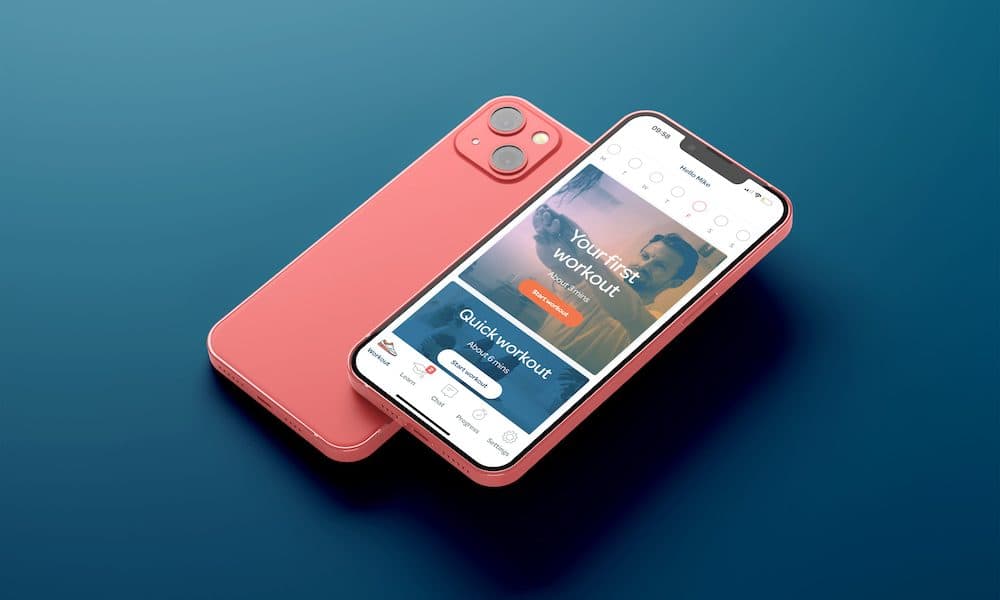
A newly developed physio-supported self-management app has proven to be effective for the treatment of musculoskeletal conditions, according to a recent clinical study.
An analysis of 1,010 physiotherapy patients who used the digital tool over 12 weeks showed that there was an increase in overall physio sessions and an average reduction in pain levels.
Reach – created by the UK’s largest private physiotherapy group Ascenti – provides digital triage, personalised video-led exercise plans and a 24/7 clinician access chat feature.
The company’s ‘Unlocking physio-supported self-management through digital advancement’ report which details the results of the study was published on April 22.
It discusses clinical outcomes, patient engagement, cost effectiveness and patient satisfaction, along with the limitations of the study and challenges associated with use of the app.
Andreas Hessner, Ascenti’s head physiotherapist of digital therapies, told Health Tech World that the technology identifies the most appropriate, safe, motivating and convenient treatment pathway.
“It has the potential to be game-changing in terms of giving patients the control they want and alleviating current pressures on the NHS and employers.”
MSK
Musculoskeletal (MSK) conditions affect the joints, bones, muscles and spine, and include rare autoimmune conditions such as lupus, according to UK charity Versus Arthritis.
In its ‘State of Musculoskeletal Health 2021’ report it explained, symptoms may include pain, joint stiffness, fatigue and a loss of mobility and dexterity, and can fluctuate over time.
About 20.3 million people in the UK were found to be living with one of the more than 200 known conditions – which are more common among women, the elderly, the obese and inactive people.
People with MSK conditions are frequent users of primary, secondary and community-based health and social services.
As a result, musculoskeletal ill-health results in significant costs for individuals, employers, the health service and the wider economy.
App
Developed over the last four years and now piloted by 12,000 patients, Reach is the first physio app to provide an end-to-end hybrid solution for MSK patients.
It includes digital triage, 24/7 access to online clinician support and the empowerment of self-management tools including videos and educational articles.
The app promotes healthy active behaviour and effective self-management, while also offering onward referral into virtual consultations or face-to-face appointments.
The technology used by Reach has been purpose-built from scratch by Ascenti’s in-house digital team in collaboration with physiotherapists.
It takes patients through three stages – clinical triage, analysis and rehabilitation.
Patients must first complete a short assessment which gathers information on their pain and condition and how it is affecting their day-to-day life.
Clinician-devised algorithms then assess this data to identify the most safe and appropriate pathway for each patient – either an exercise plan or a face to face appointment.
When they receive their exercise programme – with guided videos and instructions – they then move forward into the rehabilitation phase.
They can mark and track their own progress within the app and use the chat feature to speak to a physiotherapist.
Study
An observational study of 1,010 patients was conducted using data anonymously collected in the app as part of routine care.
The patients involved were referred to Ascenti after experiencing neck, back or knee pain and their treatment journeys were mapped over a 12-week period.
They joined the programme using Patient Access, an NHS partnership service that connects patients to effective local health services when they need them online or via a mobile app.
This study was supplemented with an eight-question survey that was completed by 304 respondents within four weeks of discharge.
Its results suggest that Reach was effective in a number of key areas – patient engagement, clinical effectiveness, convenient access, encouraging exercise and patient satisfaction.
Successes
The survey found that nearly half (49 per cent) of the respondents used the app five or more times per week, while a further 29 per cent used it three or four times per week.
Spot checks taken from the exercise session tracking data suggest that this was maintained, with 62.9 per cent of patients using it in week four and 53.5 per cent in week eight.
“Not only were patients using the app more frequently, but, because it is engaging, they were also motivated to use it over long periods of time, further enhancing clinical outcomes,” Hessner said.
“This is particularly significant as studies suggest that traditional physiotherapy often struggles to engage patients in home exercise, with past research revealing as many as 70 per cent of patients do not engage in prescribed home exercise.”

Andreas Hessner
Patients measured pain improvements at the end of treatment on a 10-point Global Rating Of Change scale, from -5 indicating much worse to +5 indicating much better.
The average change reported by patients was 2.1 points.
Pain was also measured on an 11-point Numerical Rating Scale, with scores taken at initial assessment, at four weeks, eight weeks and at discharge at 12 weeks.
Improvements were seen across the study population, with results showing that those who used the app for the longest period saw the biggest impact.
The app offered direct 24/7 access to a qualified physiotherapist via a chat service. Over the 84-day period, users who completed at least one workout sent an average of 7.3 messages.
As the total number of messages increased, the ratio of messages per workout dropped significantly.
Regular movement is key to treating and preventing MSK conditions, and is an important part of an overall healthy lifestyle.
The average number of exercise sessions across the 12 weeks (among patients who completed at least one exercise session) was 33 – an average of 2.76 per week.
Those users that engaged for the full 12 weeks completed an average of 69 workouts – 5.75 per week.
Patient satisfaction with the app was high across the board. On a scale of zero to four, where zero is very satisfied and four is very dissatisfied, users scored an average of 0.9.
It appeared to increase the longer they engaged with the app, rising from 87.2 per cent at four weeks, to 91.5 per cent at eight weeks, to 93.6 per cent at 12 weeks.
During the course of the pilot a number of patients were identified as having a potentially more serious or specific pathological condition.
They were recommended to face-to-face physiotherapy or to see their GP, demonstrating that this system is effective, the report said.
And finally, a Reach physiotherapist can fulfil a much higher active capacity then a physiotherapist providing in-person treatment.
Limitations and challenges
The study is based on patients accessing physiotherapy treatment for a range of needs and so the results must be interpreted as general findings, the report said.
It should not be assumed that they apply equally to all injury types – for example those involved in road traffic incidents.
In addition, there may be benefit to designing future research to include a control group so more direct comparisons with in-person treatment can be made.
In terms of the app, the report found there to be certain limitations when it comes to its use, including digital inclusion, reduced trust, response times and patient expectations.
A significant percentage of the population do not have access to digital devices and some do not feel confident using digital tools.
Some patients may be more likely to trust a diagnosis that is given to them after a physical examination.
And there were more and less busy times when it came to managing patient queries which led to different response times.