



Research

Many off-the-shelf self-test kits claim to detect conditions but offer little or no evidence to support their accuracy, researchers have found. Researchers from the University of Birmingham purchased 30 self-test kits in 2023 from UK supermarkets, pharmacies and health shops. The kits included tests for bowel cancer, blood cholesterol, menopause and vitamin deficiency — conditions [...]
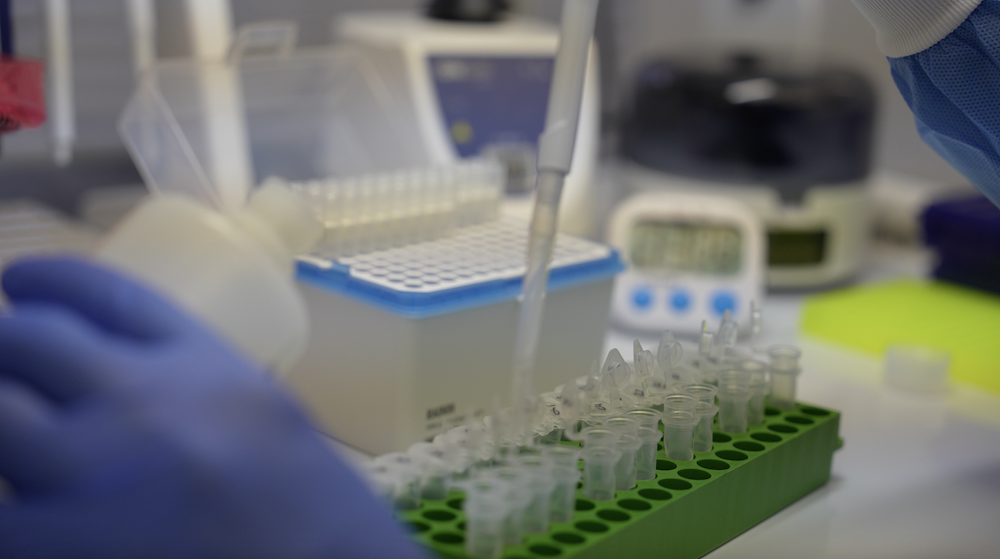
Biostate AI has secured strategic research partnerships in the U.S. and India, and a joint venture in China, dramatically expanding the global dataset for their RNA sequencing-based precision medicine solutions. Biostate AI uses RNA sequencing, a snapshot of gene activity, to build AI models that accurately guide drug development, therapy selection and personalised health predictions. [...]

By Sanius Health The treatment landscape for multiple myeloma is changing fast, and for the better. For patients who have relapsed or exhausted their options, there is now a renewed sense of hope. Chimeric Antigen Receptor Therapies (CAR-T) and bispecific antibodies (BsAbs) are transforming outcomes in ways that were once unimaginable. Trispecific antibodies (TsAbs) are [...]

A new AI model could speed up drug development by reducing the number of parameters needed to predict how molecules bind to proteins — a vital step in designing new drugs. The Predicting Affinity Through Homology (PATH) algorithm cuts the billions of variables used in traditional deep learning, allowing predictions to be traced to specific [...]

By Dr Anton Yuryev, Consulting Director, Bioinformatics and Data Science, Elsevier There are more than 300 million people worldwide living with a rare condition, but only 5 per cent of 8,000 known rare diseases have licensed treatments. One pragmatic and potentially life-changing solution to the rare disease challenge is drug repurposing – the exploration of [...]

A Scottish PhD student has created an AI device to support early skin cancer diagnosis in remote areas, without needing internet or direct access to a dermatologist. Tess Watt, a PhD student at Heriot-Watt University in Edinburgh, developed the system using a small camera connected to a Raspberry Pi – a low-cost, energy-efficient handheld computer. [...]

Two US hospitals have developed simpler ways to preserve hearts after circulatory death, potentially increasing access to life-saving transplants. The approaches aim to overcome challenges with using hearts from donation after circulatory death (DCD) — where a patient’s heart stops after life support is withdrawn — as opposed to brain death, where the heart continues [...]

By Nick Portch, Life Sciences, Equinix The race to develop new therapies has never been more urgent, or more complex. As life sciences companies increasingly turn to artificial intelligence (AI) to speed up drug discovery, one factor continues to determine success more than any other: access to data. But the very thing that could fuel [...]

The UK government has launched a £2bn life sciences strategy aimed at driving growth, speeding up innovation, and transforming NHS healthcare. Life sciences is one of eight priority sectors in the UK’s Industrial Strategy. The ten-year plan aims to boost an industry worth around £100bn and employing around 300,000 people. The strategy focuses on three [...]

Hundreds of people with rare forms of cystic fibrosis will gain access to a new once-daily therapy through the NHS for the first time. Cystic fibrosis is a genetic condition that causes thick mucus to build up in the lungs and digestive system, leading to infections, breathing problems and digestive issues. The new treatment, a [...]