



Europe

By Dr Andrew Feeney, IEEE Senior Member There has long been a global debate on personal versus governmental responsibility for the health of an individual. A British Social Attitudes Survey in 2017 reported that 61 percent of respondents thought that individuals had greater responsibility for their health than the government. Today, wearable technologies for monitoring [...]

Auryx has raised US$2m to develop earbud health monitors using everyday earbuds for continuous health tracking. The Cambridge startup says its platform draws health insights from sound, allowing devices people already use to capture a broader range of physiological signals than traditional optical wearables. The company started in a Cambridge pub, where PhD researchers Erika [...]

The UK medical technology sector has an annual turnover of over £26.4 billion. The opportunities for growth are huge, driven by developments in diagnostics, remote monitoring and patient care and enabled by AI, the Internet of Medical Things (IoMT), and software-enabled products. There are many challenges for MedTech companies in this fast growing market, from [...]

Alesi Surgical, a surgical technology company tackling surgical smoke in operating theatres, has successfully closed a £7m funding round led by IW Capital and supported by existing shareholders, IP Group and Mercia Ventures. The funding will support international commercial expansion and further development of Alesi’s Ultravision2 platform as regulation around smoke control tightens. Dr Dominic [...]
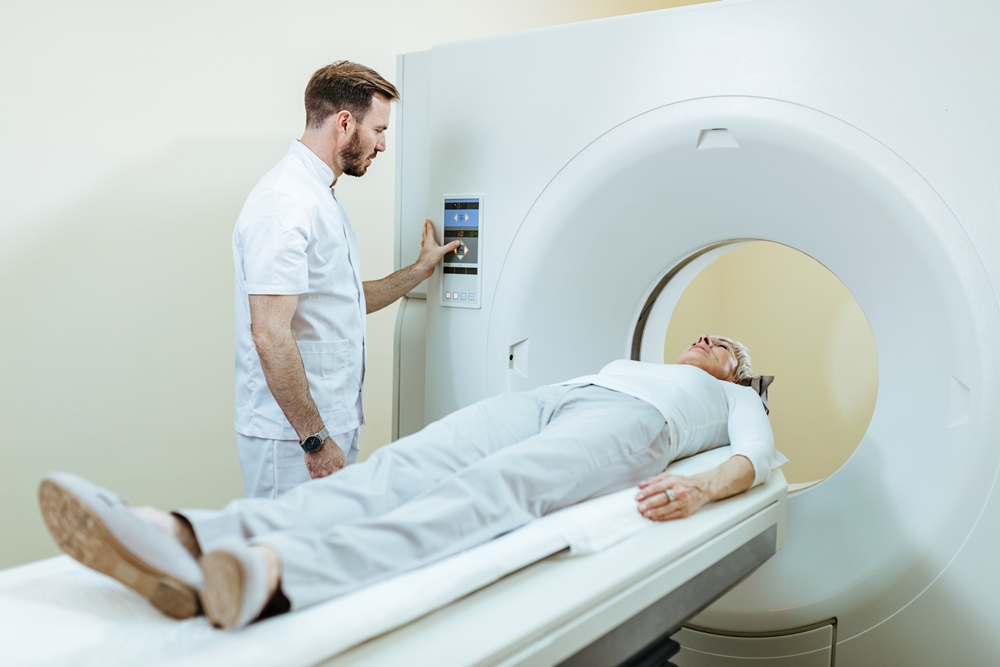
An AI model detected pancreatic cancer earlier and more accurately than radiologists, offering hope of earlier diagnosis, a study found. Pancreatic ductal adenocarcinoma is the most common form of pancreatic cancer. It has a poor survival rate and is usually diagnosed late, when symptoms and visible tissue changes are often absent. The model, called REDMOD, [...]

By Andy Barker, strategic advisor for digital health at Harris Health Alliance, and formerly IT director for East Kent Hospitals University NHS Foundation Trust and digital transformation lead for Kent and Medway ICB. Neighbourhood care brings many benefits. It means that a multidisciplinary care team can look after patients, whatever their needs. That team can include acute, primary, [...]

By Dr Anne Blackwood, chief executive, Health Tech Enterprise In today’s medical technology landscape, Artificial Intelligence has become the catch-all solution to every problem, or so it seems. While AI is undoubtedly adding value in MedTech, its dominance in investor conversations has created an uneven playing field. Founders developing clinically meaningful but non-AI-driven solutions may [...]

Hospital patients at every NHS trust in England can now check referrals and appointments in the NHS App, making it easier to manage care in one place. Around 64 per cent of all hospital appointments are currently visible through the app, with many patients also able to reschedule or cancel appointments, helping to cut missed [...]

System C has announced the rapid expansion of its AI-powered FormFlow Assistant across 15 local authority social care teams in England. The tool, which uses ambient AI to handle documentation during assessments, is enabling councils to complete significantly more assessments with existing resources, with customers reporting documentation time cut by half and capacity for at [...]

Article produced in association with Jeen Health Karyotyping is one of the oldest tools in medical genetics. For more than fifty years, cytogeneticists have been staining chromosomes, viewing them under a light microscope, and arranging them by size into the familiar numbered karyogram. The work is meticulous, labour-intensive and requires years of training. It is [...]