

It has been just over two years since the public launch of 1907 Foundation. In that time, we recruited a leading, multidisciplinary team of scientific advisors, created an award that has enabled four young, disruptive Trailblazers, and we created our own software (named “Atala”) for making the grant management process more efficient and equitable.
The 1907 Trailblazer Award was a successful “proof of concept” but the ambition is far greater; alongside the 1907 Trailblazer Award, we are building Atala, a software toolkit which allows Scientific Advisory Boards to make data-informed, unbiased grant allocation decisions.
Third party funders – not just 1907 Foundation – will have access to this toolkit.
The 1907 Trailblazer Award will be best in class because of how we make decisions (the process), not just because of who we choose (the result).
But the broader benefit is going to be time savings for grant applicants and administrators in how they identify and apply for grant funding (i.e. Atala will be a Common App for neuroscience and mental health grants).
Atala is complementary to – not in competition with – the 1907 Trailblazer Award. However, building Atala is not possible while an award process is underway; it’s akin to manufacturing a car while retooling a factory.
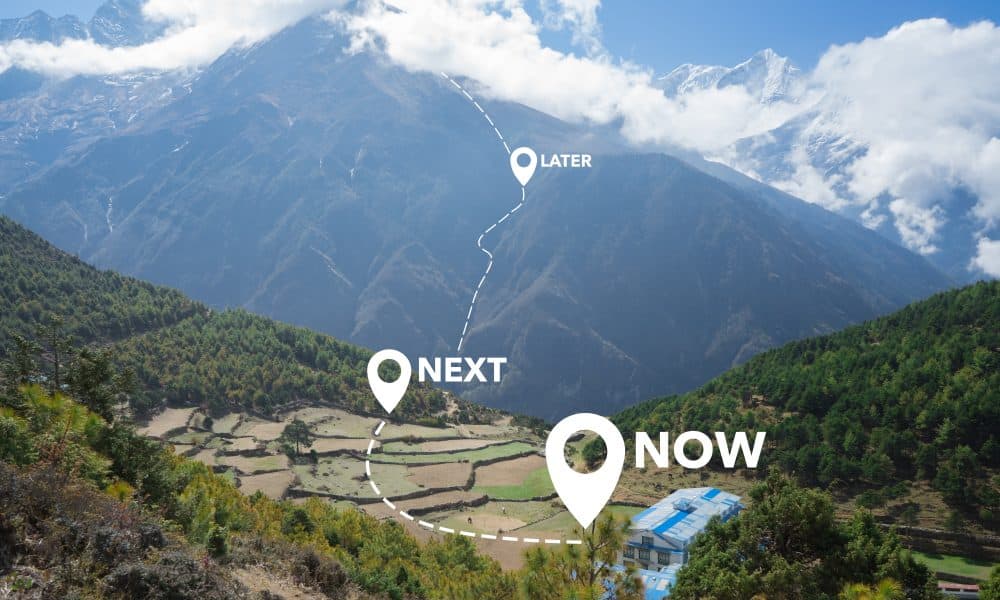
At the beginning of the summer, we put the 1907 Trailblazer Award pause in ‘22 to rebuild the factory to increase throughput in ‘23 forward.
While we are proud of what we have accomplished with the 1907 Trailblazer Award in a short period of time, we can achieve far more than funding two scientists per year; we can systematically change the entire field of scientific grant funding by re-engineering the grant marketplace.
If applicants spend 40% of their time applying for grants, our goal is to give them 36% of that time back.
In year 1, we built our own grant management software for our own use.
We did this not because we wanted to but because we felt we had to; the off-the-shelf software which was available and commonplace, yet expensive, was poor quality.
With one software engineer (our CTO), we built a superior product. But “superior” doesn’t mean we’re finished; we’re just warming up.
We have onboarded a team of software engineers, and we plan to scale Atala across the neuroscience and mental health universe.
We believe that the keystone to finding causes & cures for mental illnesses is by collaborating with foundations – outside our own – to make grant decisions Effective (risk = reward), Efficient (simpler applications = less time waste), Equitable (blinded review of scientific proposal = scientific merit) and Ethical (informed consent).
We plan to share our know-how created by our software development to make the entire ecosystem better for scientists.
We take a scientist-centric view, rather than a funder-centric view, in creating a path to enabling causes and cures via mental health research.
We’re confident that scaling Atala will bring the much needed improvements to the entire grant funding and management process for not only the mental health research industry, but for all grant funding initiatives.
To learn more about Atala, schedule a demo with us.