
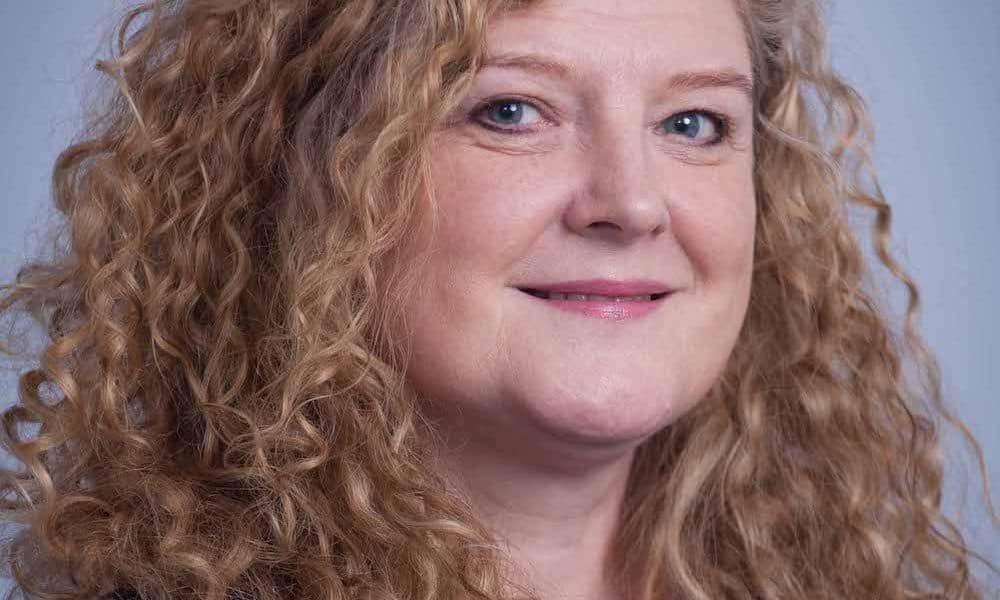
ETL transforms digital and built environments in the health and life sciences sectors, while driving investment into the NHS. Seven years on from launch, its pioneering approach is now in demand globally, helping organisations adjust to unprecedented change and challenges. HT World spoke to Tina Nolan, ETL’s managing director, and lead for healthcare strategy and planning, to find out more.
ETL was borne out of a desire to drive fresh investment into the NHS via a pioneering consultancy model.
It emerged from the estates and facilities function at Guy’s and St Thomas’ NHS Trust in 2014 with a mission to help public and private sector organisations transform their environments.
Its overriding goal, however, was to reinvest any profits back into one of London’s largest NHS trusts.
Today its influence in shaping healthcare and life science environments can be seen globally via an international network of projects.
In the white light of a pandemic that has stretched NHS resources to their limit, meanwhile, its role as a generator of inward investment into public health is perhaps more important than ever.
Tina Nolan joined ETL as employee number two and has witnessed its rapid development since.
As managing director, she sees great potential for global growth in healthcare strategy and planning aligned to health sciences; and, in the wider sense, for innovation in the planning and delivery of health environments to influence better care and outcomes for patients.
Here she speaks to Health Tech World about ETL’s approach and its plans for the future.
HTW: What was the original plan for ETL at launch?
TN: We were established to expand the trust’s commercial offering, specifically around external consultancy to other health organisations, encompassing three core objectives.
Firstly, it was about NHS trusts being able to make commercial gains, to help them to generate investment to fund activities that couldn’t be covered under the NHS tariff, like research, for example.
Secondly, the NHS is always looking to save money, so the view was that if we set up a consultancy to actually earn money and bring in income, we wouldn’t have to look at alternatives like the outsourcing of cleaners and porters, for example to meet cost improvement targets.
The third factor was around the NHS sharing its capabilities and skills. Guy’s and St Thomas’ is one of the largest trusts in the UK and clearly has a strong history of successfully delivering innovative capital projects. It was about sharing that experience and bringing together the in-depth knowledge of the NHS while also working with the private sector.
And the consultancy quickly developed from there?
Yes – in fact we reached £10m turnover last year and now employ around 90 people.
We have very successfully established ourselves in life sciences, which was not part of the plan originally, and we’ve got some very big clients, such as DEFRA, working on some very big schemes.
In the very early days, we focused on building the right leadership team to roll out this new model. After that we developed very rapidly with a lot of success.
One of our early projects was healthcare planning for a new children’s hospital in Dublin, which is one the largest ever public sector infrastructure projects in Ireland. We also did a lot of work in the Middle East, including in Qatar and Saudi, and around some major medical campuses, pulling together health and life sciences along with the academic side of health.
While we started off in healthcare strategy and planning, capital development and property, we gradually developed a very strong reputation in sustainability too. We have always hosted sustainability frameworks for the NHS, including through applications for grants to address net zero carbon. Out of that we have developed a very successful consultancy service which has extended beyond health, to include public sector bodies such as local councils and police forces.
Over the last 18 months we have packaged together our ‘infrastructure solutions’, offering which is focused on bringing together commercial solutions, business cases, financials, economics and – increasingly – social value within the delivery of health infrastructure projects.
We have all the attributes of a social enterprise and were set up to support the NHS, with our profits going back into the NHS. But we can also support it in helping society in general, through healthcare strategic planning, care pathways and models of care for patients.
This, of course, includes the whole digital agenda, virtual consultation, remote services and looking after patients in their own homes – contributing to reducing the need for travel, which links back to sustainability.
You now have a global reach – how did that evolve and where do you see new opportunities?
Yes, we do a lot of work internationally. We’re well established in Qatar, where we’ve done work for the major health provider there. It’s a large medical corporation that provides 90 per cent of the healthcare to people in Qatar.
We have worked in Qatar for a number of years in developing clinical strategy and its health infrastructure programmes, specifically on planning a major medical campus in the centre of Doha which will provide a range of specialist tertiary services.
We’ve also worked in Saudi Arabia, specifically around its programme of PPPs [public private partnerships] to address the health infrastructure challenges.
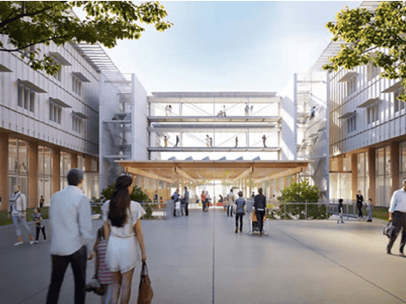
ETL is delivering a programme of new hospitals, funded by the Stavros Niarchos Foundation (image courtesy of RPBW Architects).
In Greece, we are delivering a programme of new hospitals, funded by the Stavros Niarchos Foundation (SNF). ETL has worked with the SNF, supporting a series of infrastructure projects with a budget in excess of US$450 million. These infrastructural projects are planned to support a significant role in the transformation of the Greek health system and its journey towards an integrated healthcare system.
ETL has been responsible for the clinical and functional briefing of all three hospitals, workforce planning underpinned by new ways of working, organisational governance and working with the ministry of health to ensure these facilities are sustainable, support the planned integrated health care system and worthy of international accreditation on transfer to the Greek state.
We’re are members of UKIHMA (United Kingdom International Healthcare Management Association ) and are currently talking to the Department for International Trade about a number of opportunities in Asia and MENA region. We see that part of the world, post-COVID, as being very interesting in terms of future health infrastructure needs.
How has the COVID-fuelled digital health surge affected your approach?
The pandemic clearly accelerated the focus on the potential for digital to replace hospital care and provided some of the evidence that, actually, digital can work.
I know there’s a bit of a backlash, with the government urging GPs to get back to face-to-face appointments, but somewhere in the middle is the right solution.
We would say it’s much better for patients to be looked after in their own home for as long as they can. Therefore, in terms of the work we do in strategy and planning, it’s really important for us, when looking at patient pathways, to understand the role that digital can play.
Yes, it’s about keeping patients in their own homes, using wearables to monitor their health status, but it also helps clinicians. Automatic data capture at the point of care and the appropriate adoption of AI in reporting and decision making improves accuracy and releases time to care.
The other aspect of digital is the data it provides, enabling us to have expansive datasets covering whole populations to enable us to monitor health status on a predictive and preventative basis, before people are admitted to hospital.
In terms of its impact on our work, COVID highlighted the need for investment in health infrastructure, but the whole digital surge has also highlighted the fact that hospitals can be smaller, and there’s a lot of what happens in hospitals that could happen elsewhere.
For our UK work – and we are working on a number of the schemes in the Government’s New Hospitals Programme – I think we will be very busy in the short to medium term addressing the legacy backlog in investment in health infrastructure highlighted in the pandemic, but in the long term, we need to be looking much more towards digital and technology as a substitute for bricks and mortar.
What other meaningful healthcare changes have come out of the pandemic?
I remember in the early days, we all looked on in amazement as China built a big hospital in five weeks, then we built the nightingale hospitals in the UK in a short space of time and we realised that a lot of what we do can be done quicker and in a more standardised way when there is impetus behind it. Of course, we’ve also seen how rapidly we could get a vaccine to market when you’ve got everybody working together.
COVID clearly required NHS trusts to work together at a system level, in a way that they haven’t done before. I don’t think individual trusts will ever go back to working in silos.
We already have the integrated care system organisations being set up now to promote more collaboration and we’ve got many of the key providers coming together and working at scale to address the COVID recovery and the elective care backlog.
I think that’s been a real positive in that it has forced people to work collaboratively, and all for the better.
How does ETL stay ahead of the latest health tech trends?
Our business model is to ensure ringfenced time for research into latest trends and new technologies and making sure all our consultants are up to date – and we allocate lots of time to that with structured sessions, thought leadership pieces and guest speakers at internal events.
We have people within the organisation who hold responsibility for research in specific areas. For example, in our strategic planning team we’ll have two or three people doing research in their field, and the same across the organisation. So, while we don’t have dedicated teams, we dedicate a significant amount of our time to it.
In fact, one of the reasons we work so well in providing strong health strategy and planning services is because we’ve come from a range of backgrounds. We have people who are architects, who are clinicians, who have worked in NHS, who are from finance and economic backgrounds.
We’re a real mixed bag, but we do bring together all of the disciplines that you need for a rounded service offering in one organisation.
What are the biggest challenges facing ETL currently?
At the moment, recruitment is a significant barrier to growth. There’s a very buoyant market out there for project and programme management in particular, with a lot of people moving around.
During the pandemic, there was a fall in the hospitality, entertainment and retail sectors and a lot of companies are now looking to health and life sciences, particularly with the government’s new hospitals programme.
Everyone sees that as an opportunity, which means everybody’s looking for people who are experienced in life sciences. So that’s quite a challenge at the moment.
And where do you see immediate future opportunities for ETL?
Post-COVID, it is very obvious that health and life sciences and research go hand in hand, so that’s a very big growth area for us – in the UK and internationally – and we are already in that space. Also, digital and Net Zero Carbon approaches will be integral to all our work.
The health and life sciences sectors will continue to transform at pace and we see a need to support our clients through the whole project life cycle.
We are there at the beginning – supporting clients with strategy and planning and then working with them through the delivery stages – and we are there at the end , guiding them through the transition and commissioning and operational stages. That is what makes us unique.