


Currently, the estimate for the global prevalence of loneliness in those aged over 65 years is 28.5 per cent. A study conducted in the US reports that one-quarter of community-dwelling older adults are considered socially isolated, and the COVID-19 pandemic is only increasing this number. Here Janet Adams, chief operating officer at SingularityNET, argues that robotics could help the elderly combat the pandemic that is loneliness.
The media is not always positive towards artificial intelligence (AI) robotics. From movies like The Terminator to headlines such as “Facebook engineers panic, pull plug on AI after bots develop their own language”, there has often been misinformation and fear when talking about social robots. However, the benefits of AI robotics for social good are often overlooked.

Janet Adams, SingularityNET
The fear of the ‘killer robot’ is often pushed by the media, yet studies such as those conducted by Joy For All robots, a campaign to bring robotic dogs and cats to the elderly, provide evidence of the contrary. A 2018 pilot study evidenced that of the 60 state elderly residents that received robot pets, 70 per cent reported feeling less lonely after one year.
Isolation: the ultimate pandemic
The coronavirus pandemic has been isolating the elderly more than ever. The effects of social isolation could be detrimental to health, both physically and mentally. Medical research suggests that social isolation and loneliness can cause an increased inflammatory response.
This response can increase the severity of other pathologies, for example, dementia, depression, high blood pressure and strokes. Moreover, research by Stanford University and AARP, a US non-profit organisation promoting the wellbeing of elderly people, suggested that social isolation can add nearly seven billion dollars a year to medicare costs due to socially isolated patients going to hospital sicker and having prolonged stays.
The impact of forced isolation due to pandemics has been observed before in the 2003 Hong Kong SARS outbreak. During this time, Hong Kong saw a rise in suicides amongst the elderly locked down. There is evidence that this rise was due to elderly patients feeling isolated and not wanting to burden their family and care workers, already strained by the outbreak.
The introduction of humanoid social robots could help decrease the impact of social isolation on the elderly by providing them with a companion who listens to their thoughts and feelings without judgement.
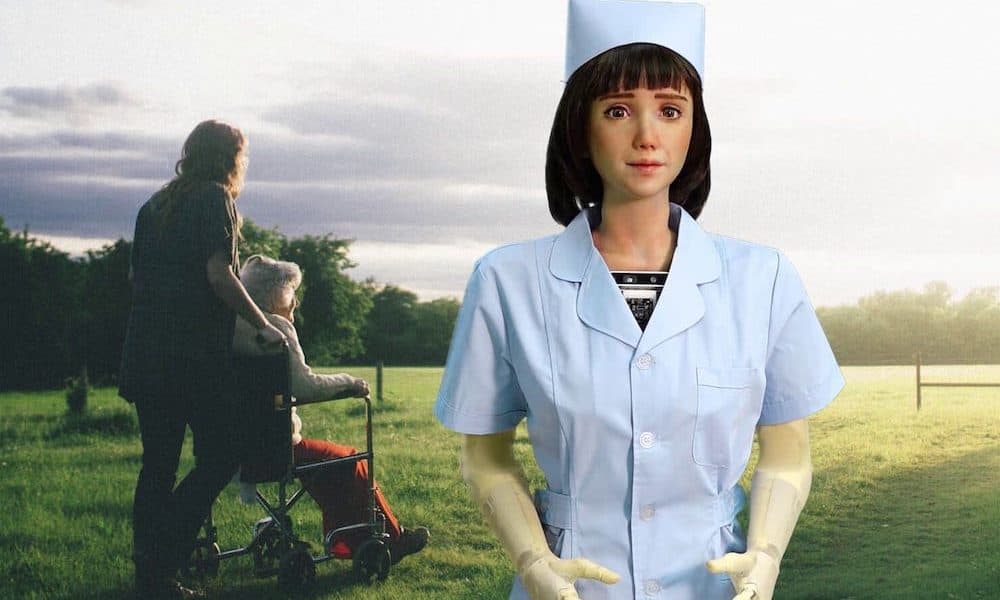
This is why Awakening Health, a joint venture of SingularityNET and Hanson Robotics, is currently working on creating social robots for the elderly. This has been achieved in the form of Grace, a humanoid robot designed for companionship and to assist healthcare personnel with basic procedures. Grace is currently the most empathetic humanoid robot to date — she can recognise and respond to seven human emotions, do talk therapy, conduct uplifting activities such as guided meditations when sensing depression signals, and help in everyday activities such as placing calls.
Common misconceptions
Despite the benefits robots like Grace provide the elderly, there are still many concerns and misconceptions. One of them is that using technology to replace human interaction could isolate patients even more. However, funding for elderly care is currently down in many countries, such as the UK and the US, which means a decrease in the number of carers and social programs available.
Even private care can struggle with the needs of patients, especially for patients with conditions such as Alzheimer’s disease. For patients with Alzheimer’s disease, care costs are high across all settings: home, daycare, assisted-living facility and nursing homes. This cost is normally around three times more expensive than patients without Alzheimer’s. Robots like Grace can help carers feel less overwhelmed.
Technology has long been feared for its potential to eliminate the human touch, especially when considering social robots. However, the point of these robots is not to replace human care but to instead lessen the burden on families and carers, freeing their time to facilitate meaningful connection. For example, when Grace performs routine health checks, such as checking patients’ temperature, blood pressure and filling charts, she allows her human colleagues to spend more time connecting with patients in a way that only humans can do. However, there are benefits to robots over human care too.
Some elderly reported telling a social robot things they would usually keep from their carer, such as telling them about falling out of bed often but hiding it from carers. These hidden accidents are likely due to embarrassment, not wanting to be judged or burden family or carers. Robots, however, cannot judge or feel burdened, making them the perfect confession tool.
Another common misconception with robots for the elderly is that seeing robots take over their carers’ responsibilities, patients may feel infantilised or debased.
However, this stems from the fear that robots will take over human roles, a narrative often portrayed in the media. In reality, humanoid robots would simply support human carers by automating routine tasks, as well as gathering accurate data to speed up diagnosis, treatment and alerting staff in case of an emergency.
The elderly will not be left for robots to deal with. Instead, robots will allow carers to collect data to help treat patients and act as a companion to lessen the suffocation of loneliness. As for the elderly feeling infantilised or debased, reports from the Hong Kong pilot study using Hanson Robotics’ Sophia robot provided evidence that people could have in-depth conversations with Sophia.
Moreover, they often reported feeling significantly better after talking to her and having more positive feelings than prior to the conversation. Nevertheless, robots aren’t meant to simulate intimacy but instead lessen solitude for the elderly.
To say that using advancements in technology, such as Grace, is isolating the elderly could not be further from the truth. Grace is designed to help the elderly by not only providing companionship but also aid in activities that connect them with the world, such as setting up phone or video calls to family, alerting their caretakers or ordering food. Social robots could bridge the gap for the technologically naive elderly and provide needed relief for many care workers.