
UK researchers have mapped how anxiety develops in the brain during no-win situations, paving the way for improved diagnosis and treatment.
The University of Plymouth research identified specific brain patterns that appear during “avoid-avoid conflict” – when a person must choose between two unpleasant options.
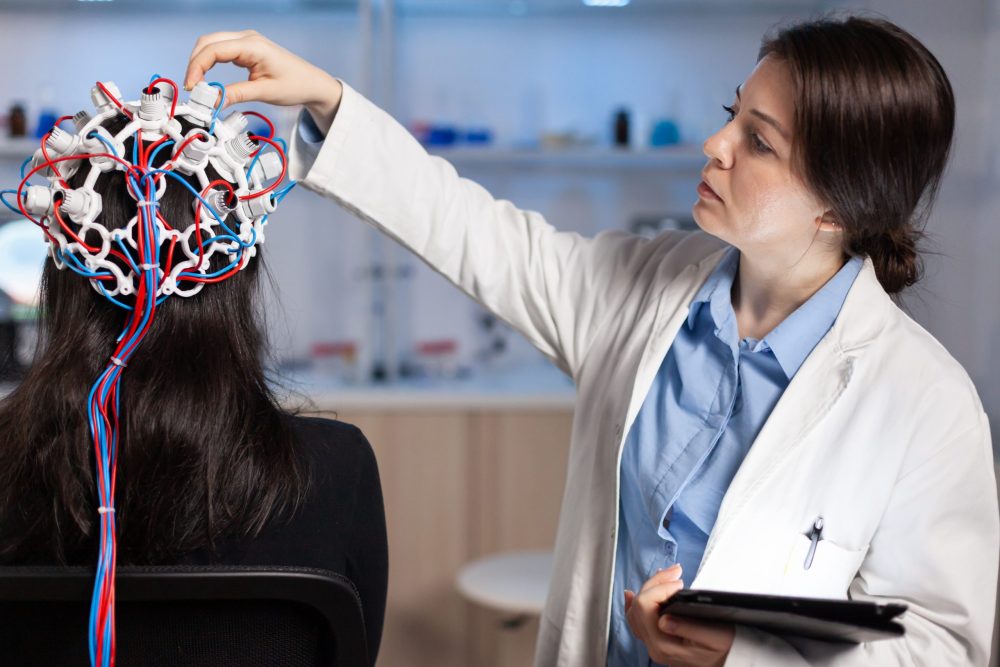
Using EEG (electroencephalography), a test that tracks electrical activity in the brain through sensors placed on the head, scientists recorded measurable responses linked to anxiety.

PhD student Benjamin Stocker, from the University’s School of Psychology, Sport and Health Sciences, created a video-game-style task for 40 young adults aged 18 to 24.
Participants used a joystick to steer away from threatening objects on a screen. Some scenarios were simple, while others forced them into impossible choices between two negative outcomes.
During these high-conflict tasks, the right frontal region of the brain showed greater activity in theta waves – a rhythm associated with cognitive and emotional processing. Other brain regions were also activated depending on whether a situation was stressful or manageable.
The findings, published in the International Journal of Psychophysiology, suggest these brain patterns could serve as a signature for anxiety-related conflict.
“Think of it like finally having a way to ‘see’ anxiety in the brain, rather than just relying on how someone describes feeling anxious,” said Stocker, whose interest in the field stems from his previous work in general practice.
“I spoke to a lot of patients and saw there was a real need to address this issue. At the moment, there’s no procedure to quickly and properly diagnose someone with a mental health condition.
“If you get a cold or catch the flu, you get prescribed medicine, but if you have a mental health condition, it could be a six- to nine-month trial-and-error period before getting the right diagnosis and treatment.
“This research helps us understand the biological basis of anxiety.
“This could eventually lead to better ways to diagnose anxiety disorders, new treatments that target these specific brain patterns, and a deeper understanding of why some people struggle more with difficult decisions.”
The research journey began during Stocker’s undergraduate psychology degree, continued through a master’s in neuroscience, and now forms the basis of his PhD – all at the University of Portsmouth.
Traditional anxiety research focuses on “approach-avoid” conflict – weighing up something good against something not quite as good.
This study is the first to integrate EEG with an “avoid-avoid” scenario where no option is beneficial, more accurately reflecting real-world anxiety situations.
The study produced statistically strong results, with large effect sizes, showing clear and substantial differences in brain activity between high- and low-conflict situations.
“It represents a significant step towards evidence-based, personalised mental health treatment that could transform how anxiety disorders are diagnosed and managed in the UK,” said Stocker.
The study was conducted under the supervision of Dr Roger Moore and Dr Tom Lockhart at the University of Portsmouth.
Dr Moore said: “Ben’s research brings us a step closer to identifying a reliable, individual-level biomarker that could aid diagnosis of clinical anxiety and inform new non-drug-based treatments.”
The team is now planning future studies to test how anxiety medications affect these brain patterns and to include people with diagnosed anxiety disorders.
This next phase of research will be crucial in determining whether the findings can translate into real-world diagnostic tools.