
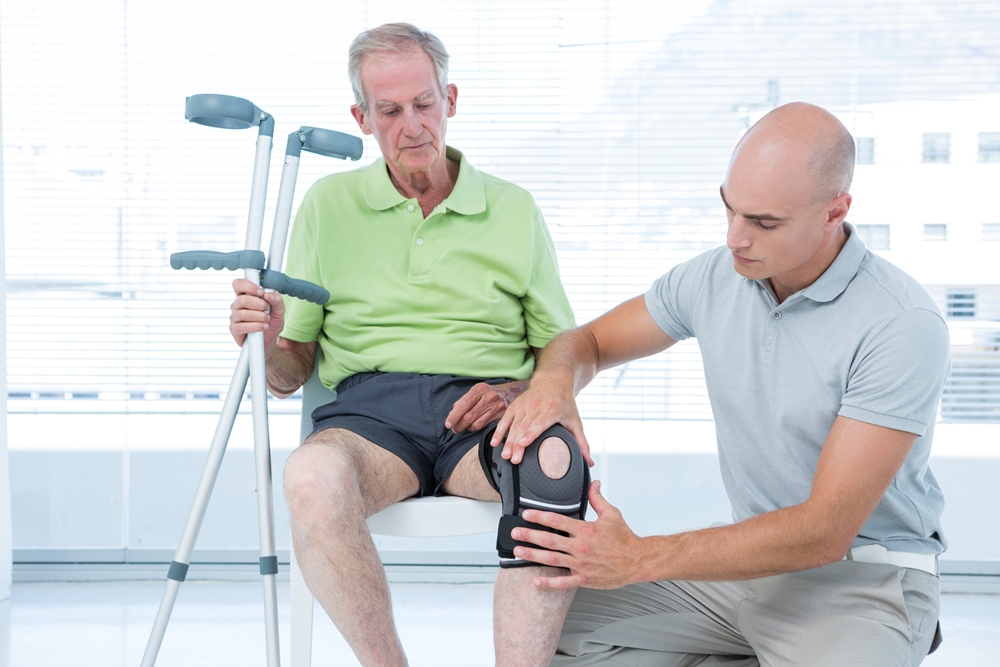
Researchers will test linking step-count data from wearables with health records to see how knee replacement surgery affects patients.
The study will combine data already gathered inside and outside the health service, linking smartphone and fitness-tracker information with surgical records.
Knee osteoarthritis, a degenerative joint disease and the most common reason for replacement surgery, affects about one in five people over 50 in the UK, with more than 120,000 knee replacements each year.

A University of Manchester team is asking for the help of people who have already had a knee replacement to develop and test this approach.
Professor Will Dixon, who is leading the research, said: “Osteoarthritis causes pain and limits normal daily activities, like walking or climbing stairs. Knee replacement surgery is one of the only definitive treatments. But how much better does physical activity, like walking, get after a knee replacement?
“To make informed decisions about whether to have surgery or not, we need to know this – yet the current evidence is patchy.”
He added: “All of the data needed to understand how activity improves after knee replacement surgery already exists.”
The PAPrKA study (which stands for Physical Activity Patterns after Knee Arthroplasty) wants to recruit UK adults who had a knee replacement surgery between January 2017 and December 2023, and who used an iPhone, Apple Watch, Fitbit or Oura ring before and after their surgery.
Interested people can visit the study website at bit.ly/knee3 to donate their activity data, which will be securely transferred from the University to the National Joint Registry where it will be linked with data about their operation.
This will allow the researchers to examine how activity patterns change following surgery, including how this differs by levels of activity before surgery, types of operation, patient age and more.
Dixon said: “Millions of people in the UK routinely track their step count using their smartphone or fitness tracker. In fact, over 95 per cent of adults now own a smartphone.”
“By joining together step counts from people’s smartphones and wearables with information about their surgery, we can understand how much physical activity improves after knee replacement.”