



Rob Berman is CEO of enVVeno – a US medtech company developing novel treatments for venous disease.
Its flagship device, the VenoValve, is offering new hope to patients whose lives are blighted by Chronic Venous Insufficiency or CVI.
The condition can have a huge impact on quality of life, with many patients unable to socialise or meet the demands of work.
With VenoValve, the company is, to quote Berman, ‘in sight of the summit of a mountain that many have tried to climb, and nobody has reached.’
We called up Rob over Zoom to learn more about the impact of CVI and the prospect of reaching that summit.
“CVI is an interesting disease because, while few people recognise it by name, almost everyone knows someone affected by it—someone whose leg swells to two or three times its normal size, turns unusual colours, and, in severe cases, develops ulcers,” Rob tells Health Tech World.”
CVI is most often caused by blood clots in their veins, known as deep vein thrombosis or DVT.
When veins become diseased, the valves within them stop working correctly.
And when valves fail, blood flows backwards and pools in the legs, increasing pressure and causing swelling, pain and, in extreme cases, skin breakdown and ulceration.
For patients with severe CVI, the condition can be profoundly debilitating, making even simple household tasks difficult.
Studies have shown that patients with severe CVI experience a level of suffering comparable to those with osteoarthritis or COPD, Rob says.
He adds: “Many people say it saps them of their life. They just want their life back.”
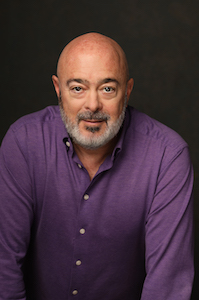
Rob Berman
Many companies have tried to tackle the problem with implants.
However, historically, these have failed as implants further increase their heightened risk of developing blood clots.
VenoValve approaches things differently.
Rob explains: “If you attempt to develop a transcatheter product from the start, you not only have to prove that the device functions, but you also have to engineer it to be small enough to navigate through the body and reach its intended location.
“We took a more traditional route by starting with a surgical valve, while others attempted to go straight to a transcatheter approach. I believe that was a mistake because it required them to solve too many complex challenges at once.
“Every aspect of the VenoValve was designed with anti-thrombogenic properties in mind, from the type of tissue we used to the shape of the leaflet and the frame.
“Addressing the risk of recurring blood clots was a priority from the very beginning”.
As with any surgery, the VenoValve procedure is not without its risk – recurrent thrombosis being the biggest.
And the team encountered some major adverse events (MAEs) due to the procedure, although this is not uncommon with new implantable devices.
Over time, physicians refine their techniques to reduce risks and improve outcomes, Rob explains.
If VenoValve meets FDA approval, the treatment could pave the way for significant advancements in deep venous system research.
Rob says: “Until now, there has been limited research in this area simply because there were no viable solutions to fix the system.
“But with the introduction of the VenoValve, we expect a surge in research efforts—not only in improving the procedure itself but also in understanding how to best manage patients post-surgery.”
enVVeno has submitted a pre-market authorisation (PMA) application to the FDA, with a decision expected in the second half of 2025.
Data from its U.S. Pivotal Trial showed that patients treated with the procedure experienced significant improvements to quality of life at 12 months compared to baseline.
Rob admits that doctors were initially sceptical of the treatment.
He says: Their first reaction was often something like, “This could be the Holy Grail—but so many others have failed, I need to see it for myself.”
“However, as they began implanting the device and saw how well their patients responded, they became strong advocates.
“That’s why enrolment started slowly but picked up over time—once physicians saw consistent success, they wanted to treat more patients.”
FDA authorisation is just the first of many mountains, Rob says.
The next step is to show that there’s a market for the device, develop that market, and make it a success.
enVVeno is also developing its next generation replacement venous valve, enVVe.
Rob says: “Our goal is to lead both the surgical replacement and non surgical replacement venous valve markets and establish ourselves as the leader for the treatment of deep venous disease.
“There’s a lot of work to be done, but we think this has enormous potential, both for the two to three million patients that have no effective treatment options, and for people that decide to become shareholders of our company.
“Patients are so appreciative when they get the VenoValve.
“They literally tell us, ‘you’ve given me my life back. I can now leave the house. I can now walk through an airport. I can swim with my child’.
“That’s really gratifying for us.”