



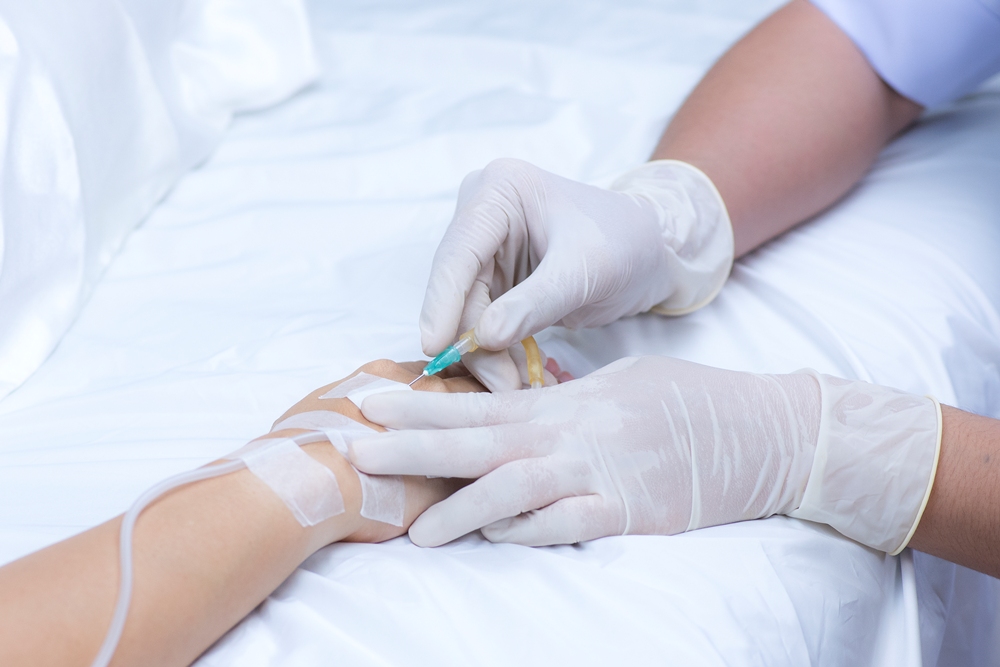
Tens of thousands of cancer patients are set to benefit from a new immunotherapy jab on the NHS, which can be given in 60 seconds.
The NHS is rolling out a new injectable form of pembrolizumab, sold as Keytruda, which can reduce treatment time by up to 90 per cent, to help patients spend less time in hospital while improving NHS productivity.
The jab can be used to treat 14 different cancer types, including lung, breast, head and neck, and cervical cancers, and helps immune cells recognise and kill cancer cells.

Prof Peter Johnson, NHS national clinical director for cancer, said: “This immunotherapy offers a lifeline for thousands of patients and it’s fantastic that this new rapid jab can now take just a minute to deliver, meaning patients can get back to living their lives rather than spending hours in a hospital chair.
“Managing cancer treatment and regular hospital trips can be really exhausting, and not only will this innovation make therapy much quicker and more convenient for patients, it will also help free up vital appointments for NHS teams to treat more people and continue to bring down waiting times.”
Around 14,000 patients start pembrolizumab therapy each year in England, and most are now expected to benefit from the more convenient treatment.
The new under-the-skin injection replaces an intravenous (IV) infusion, which can take up to two hours in total per session, sparing patients unnecessary time in treatment units and freeing up capacity for clinicians to see and treat more people.
The treatment will be given every three weeks as a one-minute injection or every six weeks as a two-minute injection, depending on an individual’s cancer type.
Currently, hospital pharmacy teams need to carefully prepare the intravenous bags under specialist sterile conditions, which can be time-consuming for NHS staff.
Moving to the ready-to-administer subcutaneous injection removes this preparation step and frees up vital clinic time and space for more patients to receive treatment.
Pembrolizumab, manufactured by MSD, works by blocking a protein called PD-1, which acts as a brake on immune responses, releasing the immune system to recognise and attack cancer cells.
Patients receiving the drug alongside other intravenous treatments may continue with an infusion where clinically appropriate.
Health and social care secretary Wes Streeting said: “Our National Cancer Plan promised to do more and go faster for patients, already we are delivering that change.
“As a cancer survivor, I know how important quick treatment is, and this roll out will offer quicker, more convenient care, saving patients time and helping them in their recovery with less time in hospital.
“Not only that, it’ll also free up valuable time so clinicians can care for even more people and potentially save even more lives.
“The government is providing the health service with record funding, around 40,000 more people are starting treatment on time, and rates of early diagnosis are hitting record highs.
“Through innovations like this, we’re making every penny and every second count, and ensuring patients get NHS care that fits around their lives, not the other way around.”
James Richardson, national specialty advisor for cancer drugs at NHS England, added: “This is a win-win innovation because patients will spend far less time in hospital and crucially our clinical teams will have more capacity to care for others.
“The time saved through this change is a huge gain for the NHS and demonstrates how we are continuing to modernise cancer care for the benefit of patients.”