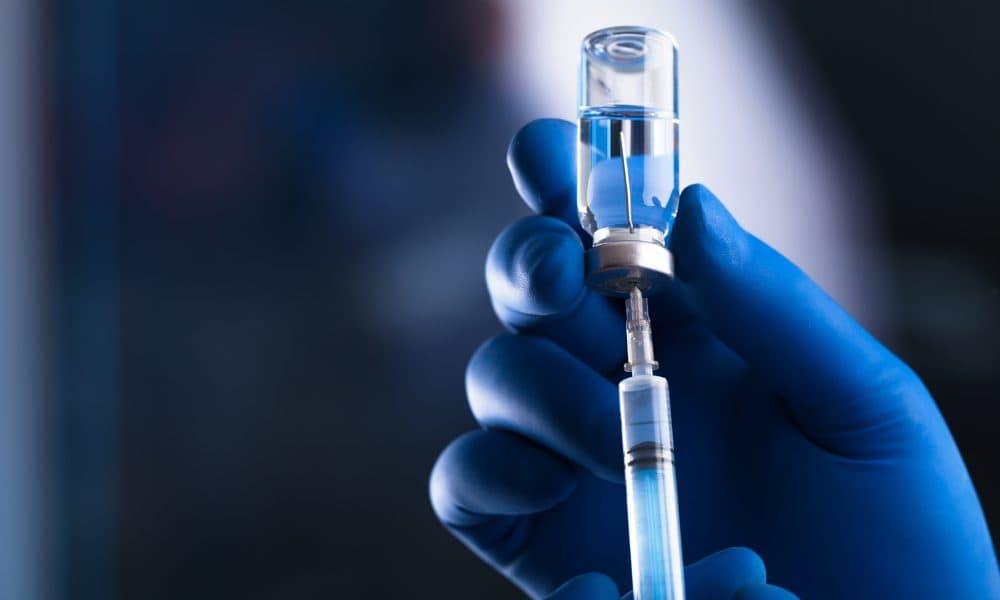
Thousands of patients with multiple sclerosis are to benefit from a new 10-minute injection on the NHS that can help slow the progression of disability while cutting their treatment time in hospital by over 90 per cent.
Around 9,000 patients in England currently receiving the drug ocrelizumab via an infusion can now be offered a jab that takes just ten minutes, following approval from the Medicines and Healthcare products Regulatory Agency, enabling them to spend less time in hospital receiving treatment.
The NHS will be one of the first healthcare systems in the world to offer the new injection to treat multiple sclerosis (MS), with stock of the drug set to be available in coming weeks.
Ocrelizumab (Ocrevus) is usually given via twice-yearly intravenous (IV) infusions, which can take up to four hours, but NHS patients in England will now be able to receive the drug via a quick ‘under-the-skin’ twice-yearly injection.
The drug, which is a disease modifying therapy for patients with active relapsing or primary progressive MS, has shown to be highly effective at halting the symptoms of MS by target a specific type of immune cell.
Clinical trials have shown the injection is just as effective as the IV treatment, with 97 per cent of patients experiencing no relapses in their condition and no development of brain lesions over 48 weeks in trials.
Professor Sir Stephen Powis, NHS national medical director, said: “This new injection will drastically cut the time that regular treatment takes for those living with multiple sclerosis, meaning that thousands of patients can spend less time in hospital while helping free up clinicians’ time to see more patients as well as vital capacity on wards.
“Ocrelizumab has represented a huge advance in care in recent years as the first drug able to change the course of the disease, and we hope this innovative and speedier option will now make another significant difference in improving patients’ quality of life and help thousands avoid longer stints in hospital for treatment.”
Multiple sclerosis is a lifelong condition that is estimated to affect more than 150,000 people in the UK, including over 120,000 people in England.
It is more common in women and each week around 135 people in the UK are diagnosed with MS.
There are three main types of MS – around 85 per cent of those living with multiple sclerosis have relapsing remitting MS and experience episodic attacks of symptoms, and taking a disease modifying therapy can help reduce relapses and slow down MS.
Approximately 10-15 per cent of patients have primary progressive multiple sclerosis, where symptoms gradually worsen and accumulate over several years, and there are no periods of remission.
Secondary progressive MS is a stage of MS which comes after relapsing remitting MS, but thanks to disease modifying therapies fewer people are likely to go on to secondary progressive MS, and for those who do, it can be delayed for longer.
Ceri Smith, Head of Policy at the MS Society, said: “We welcome the decision to license injections as a new method of delivering ocrelizumab (Ocrevus). Over 150,000 people live with MS in the UK, and many of them rely on disease modifying treatments like ocrelizumab to help reduce MS relapses.
“This method will expand the choices available to many MS patients and will mean more people can receive this treatment in a way that suits them.”
Ocrelizumab, manufactured by Roche, was first approved by the National Institute for Health and Care Excellence (NICE) for relapsing remitting multiple sclerosis in 2018, with further approval for primary progression multiple sclerosis in 2019.