


NHS scanning trucks have detected more than 10,000 lung cancers in England, with more than three quarters caught at stages one or two, new research has revealed.
People diagnosed with lung cancer at the earliest stages are nearly 13 times more likely to survive for five years than those whose cancer is caught late.
Local health teams carry out in-depth lung health checks and scans on current and past smokers aged 55 to 74.

The trucks form part of the NHS Lung Cancer Screening Programme, launched in 2019 in the areas hardest hit by the disease, which has now reached half of England’s most at-risk people.
New NHS data shows 10,678 lung cancers have been detected through the programme since it began.
The programme uses mobile scanning units in supermarket car parks, sports stadiums and busy high streets.
Under the new National Cancer Plan, the government is aiming for 75 per cent of people diagnosed with cancer to survive for five years or more by 2035.
National rollout of lung cancer screening throughout England is a key part of this.
The nationwide rollout of the NHS programme by 2030 will lead to more than 6m people across England being invited for a lung health check and is expected to support the diagnosis of up to 50,000 cancers.
Professor Peter Johnson, NHS England national clinical director for cancer, said: “Lung cancer checks and scans save lives, so it’s fantastic the NHS has now diagnosed over 10,000 people, the majority at an early stage, when treatment is most effective.
“The Lung Cancer Screening Programme has been designed around where people already are, bringing scanners into their local communities to make it easier for people to get checked.
“It is great to see the positive public response to this programme, and rolling this out nationwide will help us save even more lives in the future.”
Lung cancer is one of the most common types of cancer in England, and around 26,000 people die from the disease every year.
Seven in 10 cases of lung cancer are caused by smoking, while other causes include passive smoking and exposure to certain gases and chemicals.
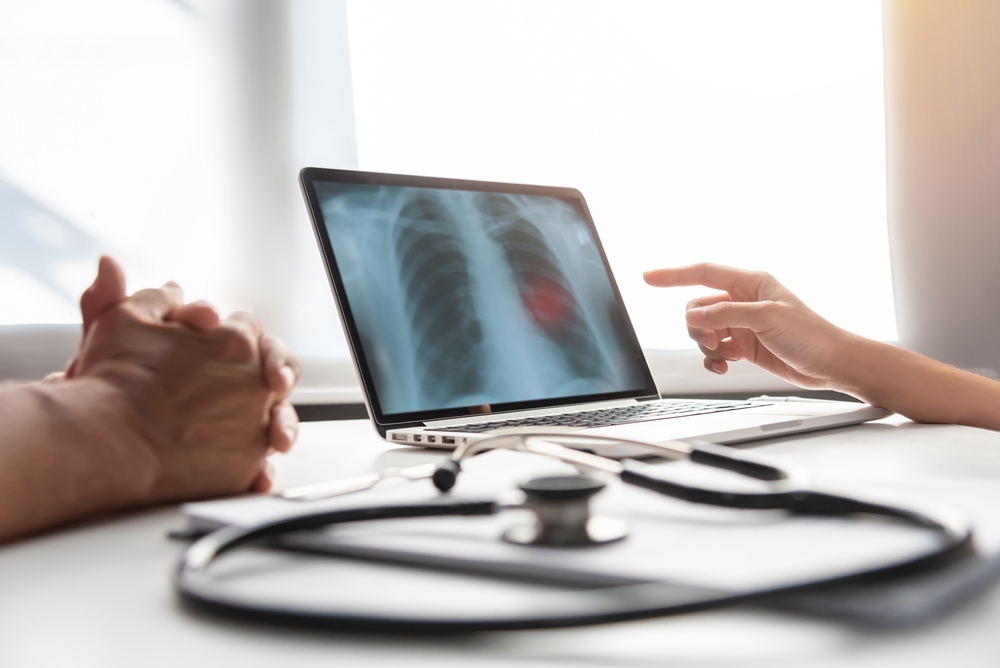
A lung health check assesses a person’s lung cancer risk using prediction models that consider factors such as age, sex, ethnicity, detailed smoking history, body mass index and personal history of cancer or lung disease, with those identified as high risk offered a low-dose computed tomography scan, or LDCT.
An LDCT scan uses X-rays to create detailed images of the lungs while using a lower radiation dose than a standard CT scan.
Body mass index, or BMI, is a measure that uses height and weight to estimate whether someone is in a healthy weight range.
Since the programme began, more than 3.3m people have been invited by the NHS to have a lung health check, and of those assessed, more than 800,000 people underwent an LDCT scan.
Data shows that more than a third of people diagnosed with lung cancer from the most deprived areas of England were diagnosed early since the NHS Lung Cancer Screening Programme began.
The NHS Lung Screening Programme is the biggest initiative in NHS history aimed at improving early lung cancer diagnosis.
Secretary of state for health and social care James Murray said: “Catching cancer early is a powerful way to save lives and ensure people live better with cancer, and this programme shows what the NHS can achieve when we take healthcare to people, rather than waiting for them to come to us.
“Under our National Cancer Plan, we want three in four people diagnosed from 2035 to be cancer-free or living well after five years, and earlier diagnosis is crucial to achieving that. I urge anyone who receives an invitation to take it up, it could be the most important thing you do this year.”
Lung cancer does not usually cause noticeable symptoms until it has grown large enough to cause problems or spread into other parts of the lungs or the wider body.
The NHS programme was specifically created to support people without lung cancer symptoms who might still be at risk of developing the disease.
Symptoms of lung cancer can include a persistent cough lasting more than three weeks, coughing up blood, chest pain, breathlessness, unexplained weight loss or fatigue.
NHS leaders said everyone who receives an invitation for a lung health check should attend, whether or not they think they are in good health.
Paula Chadwick, chief executive of Roy Castle Lung Cancer Foundation, said: “Detecting more than 10,000 lung cancers early through screening is a remarkable step forward and shows the life-saving impact of bringing vital services directly into local communities.
“We know that the earlier lung cancer is diagnosed, the greater the chance of curative treatment and longer, healthier lives, and that’s what matters most. Screening is already giving thousands more people that chance: more time, more moments, and more memories with the people they love.
“That’s why it’s so important to continue expanding this programme, reaching more communities and ensuring everyone has access. We’re incredibly proud to support this life-saving initiative and helping the Government meet its ambition of 75 per cent of people surviving cancer for five years or more by 2035.”
 What the NHS Digital Maturity Assessment reveals about the next phase of transformation