



How cheating death led to a victorious Dragon’s Den creation that saves lives
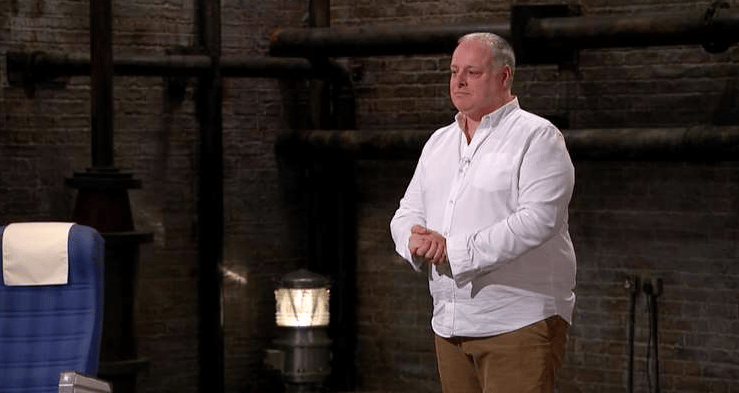
When Paul Westerman “dropped down dead” with a major pulmonary embolism, no-one could have foreseen the events that would follow. Not only would he bounce back and live to tell the tale, but he would take to national TV with a preventative device, to help save the lives of others with his condition.
Paul, now 55, put his fears to one side and stood before the Dragon’s Den panel (March 2022), where he gave an emotional pitch for the RBR Legflow. Designed to help prevent deep vein thrombosis (DVT), this simple but effective design has the power to change or even save lives, and, needless to say, was granted a 50K investment on the spot.
But this was just the beginning. Having been to the brink of death, Paul was highly driven to help prevent the same happening to other people. So with passion and drive, he took the device around the country and is currently in talks with West Suffolk NHS Trust,Northamptonshire, and Buckinghamshire NHS Trust.
The budding success of the RBR Legflow, you could argue, is changing the way DVT is treated in the UK.
How it works
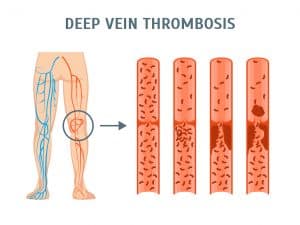
DVT (deep vein thrombosis) is a blood clot in a vein, which tends to occur in the leg. It can cause swelling in the leg with a throbbing or cramping pain. DVT can become fatal if not treated immediately.
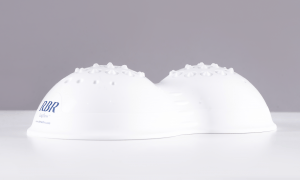
The RBR Legflow is designed to sit under the feet while you are sitting, and rotates/moves in the right directions to keep crucial blood flow at a healthy level.
Though it may be common knowledge that DVT is associated with flying, or with old age, Paul wants to raise awareness of an increase in the condition in teenagers and young adults, as a result of an increasingly sedentary lifestyle.
In an interview with Health Tech World, Paul said: “It’s really important to smash the illusion or misconception that DVT affects only the elderly, or only people who are flying.
“I’m currently supporting two families that lost teenagers to DVT. One of them was just a 14 year old boy, an online gamer, whose mum called him down for his dinner and he collapsed right there on the landing.
“It’s not an isolated incident. There is a widespread issue among gamers and DVT, and it’s costing lives.”
The BBC reported how a 20-year-old died from DVT after sitting at his games console for up to 12 hours at a time. This is just one of many reports highlighting the dangers of DVT in youngsters.
From survivor’s guilt to passion
Paul explained that being on the brink of death, and meeting so many families that have lost loved ones to the same condition, brought on a “survivor’s guilt” which was difficult to cope with. Having struggled through PTSD and bouts of depression, he has been able to fight through it and try to use his experience for the greater good.
“Almost dying meant I have to help others to live”, he said. “After what happened to me I suffered from PTSD and depression, I became insular and generally wasn’t coping.
“I do think that a sort of survivor’s guilt was consuming me and it is partly what made me get involved with RBR Legflow.
“I shouldn’t be here and I am. I want to at least use my time to help prevent other people from having to suffer the consequences of DVT.”
He added: “I’m not even looking to sell it, it’s not about money. It’s about what my wife went through when I collapsed, I don’t wish it on anyone, and what I’m doing to stop people going through it.”
Warning signs of DVT
DVT
Signs of a DVT can sometimes be misdiagnosed, as they can present as similar to strains, shortness of breath (asthma), swelling, and a rash. Paul’s campaign, seekHELP highlights the signs to look out for
H – heat
E – excessive redness
L – localised swelling
P – pain
He said: “It is worth noting that not all signs always present, and in some circumstances, there may be no sign at all.
“Being sedentary for just 90 minutes causes the blood flow to the lower limbs to reduce by over 50%. This is potentially the start of DVT”.
Working from home and DVT
Paul also called for employers to pay more attention to the dangers of DVT, especially in remote workers who are generally sitting for longer periods of time than in an office.
“I believe employers have a duty of care and staff welfare for people working from home. Chairs that go up and down and so on, they’re not doing the job. DVT is such a serious issue and it should be addressed directly by companies, especially those with employees who work from home.”
More about RBR Legflow
To explore the RBR legflow, visit: https://www.rbractive.com/
Watch the full Dragon’s Den episode here.