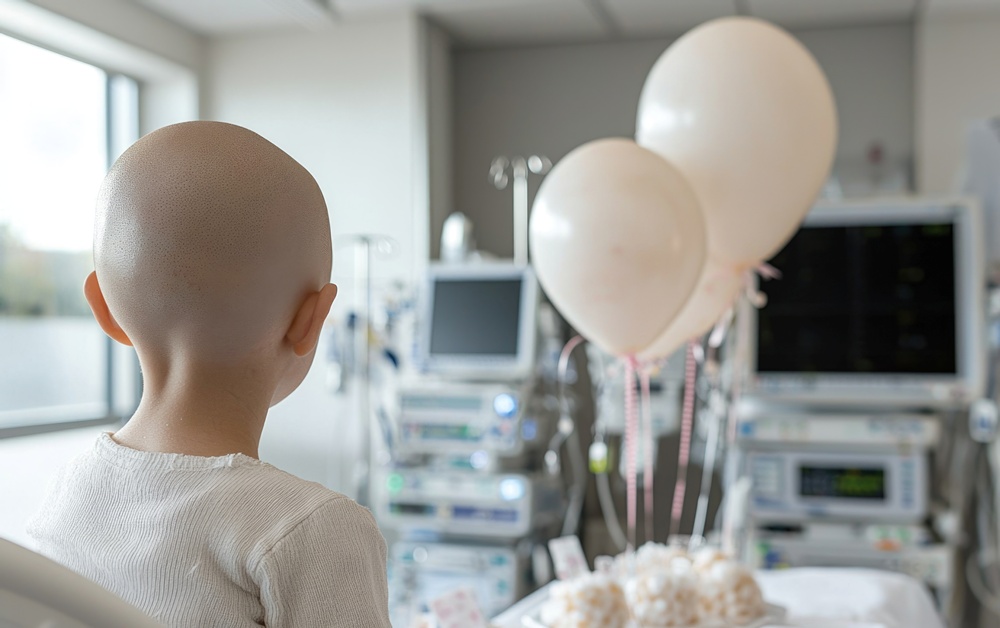
A new cancer trial aimed at training the immune systems of children and young people to fight the disease offers “a real sense of hope”, according to the chief executive of one of its funders.
Up to 60 patients with difficult-to-treat solid tumours will be recruited in the UK and the US for the study, known as Mighty.
The first patient, who is in their 20s, has already been enrolled in the study, which is being led by scientists on the Cancer Grand Challenge’s NexTGen team, whose UK arm is headed by experts at University College London.
The trial will involve patients with three types of rare and aggressive cancer.
Participants will be treated with CAR T-cell immunotherapy, which trains a patient’s immune cells to recognise and fight cancer.
Dr Karin Straathof, a lead investigator for the Mighty trial, said: “Cancers in children and young people are fundamentally different from those in adults.
“They are unique in how they develop, how they resist treatment, and where their vulnerabilities lie, so the treatments should be different too.
“We urgently need new treatments that kill cancer cells without harming healthy ones – T-cell immunotherapy has the potential to do just that.
“While current chemotherapy-based treatments work well for some patients, in other patients the tumour does not respond or comes back.”
Patients in the UK will be recruited from University College London Hospital and Great Ormond Street Hospital, while US patients will be recruited from the Children’s National Hospital in Washington and the Dana-Faber Cancer Institute in Boston.
The trial is also being co-funded by The Mark Foundation for Cancer Research, whose chief executive Ryan Schoenfeld said it offered “a real sense of hope”.
The trial will include patients with rhabdomyosarcoma, a soft tissue cancer most commonly found in children under the age of 10, which develops in voluntary muscles such as those in the arms, legs and neck.
Patients with Ewing sarcoma, which affects bones or soft tissue in teenagers and young adults, and soft tissue sarcoma, which primarily affects teenage boys and young men, will also be part of the study.
Cancer Grand Challenges is a global initiative founded by Cancer Research UK and the National Cancer Institute in the US.
 Why the new NHS financial year must fund stability today and digital maturity for tomorrow