



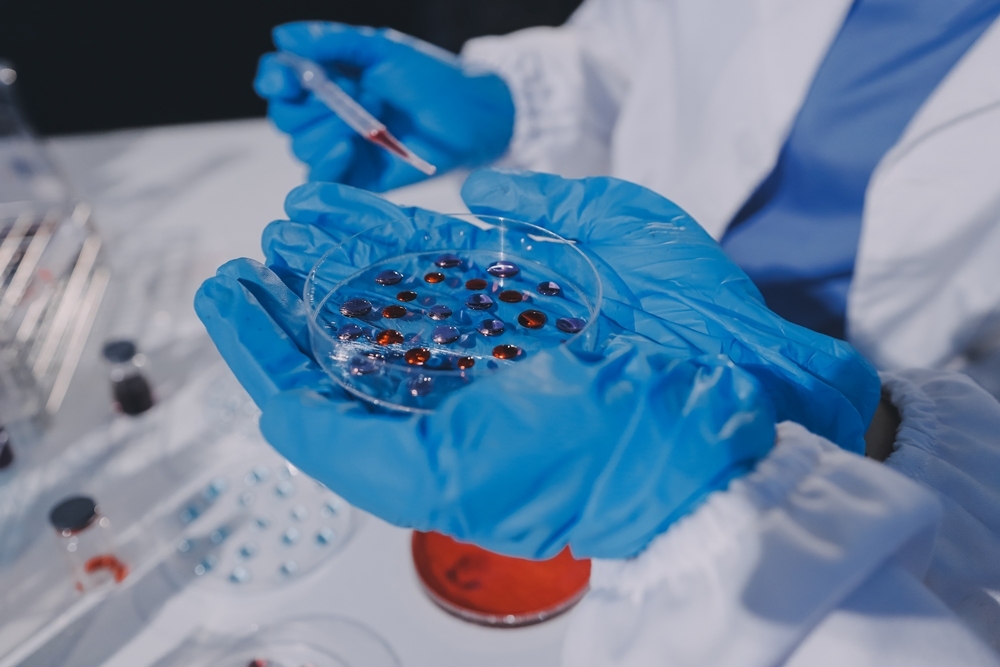
Immune cells trained by scientists may help tackle resistant infections by boosting the body’s own defences instead of relying on new antibiotics.
The approach is being explored as antimicrobial resistance, or AMR, continues to reduce the effectiveness of existing treatments.
AMR happens when bacteria, viruses, fungi or parasites no longer respond to medicines, making infections harder to treat.

In Britain alone, it contributes to 35,000 deaths a year, according to patient charity AMR Action UK.
Common infections now resistant to many available medicines include urinary tract infections, pneumonia, E. coli, MRSA and C. difficile.
The problem has been worsened by the fact that few new antibiotics have been developed in decades.
Louise Nicholas, head of operations at AMR Action UK, said: “Exploring ways to support the body’s own ability to fight infection could, over time, lead to more effective and longer-lasting solutions for patients, while reducing our reliance on antibiotics.”
Researchers at Trinity College Dublin trained immune cells called macrophages by exposing them to interferon gamma, a protein the immune system naturally makes to signal that the body is under attack.
Macrophages are white blood cells that form part of the body’s first line of defence against infection, engulfing and destroying bacteria, viruses and other foreign invaders.
After being trained with interferon gamma, the cells reacted faster, responded more strongly and killed microbes more effectively.
The team tested the approach against drug-resistant Staphylococcus aureus, a type of bacteria that can cause skin infections and life-threatening bloodstream infections, as well as tuberculosis, or TB, a bacterial infection that usually affects the lungs.
Dearbhla Murphy, an immunologist at Trinity College Dublin and lead researcher on the study, said: “When we had ‘trained’ the cells, they were better able to kill tuberculosis and S. aureus bacteria.”
The work was inspired by earlier research into Covid-19 and TB vaccines, which suggested that interferon gamma could switch on certain immune system genes.
Previous studies also found that people vaccinated against TB were less likely to die not only from TB, but from other infections as well.
The Trinity team wanted to find out whether a similar protective effect could be achieved without using a vaccine.
The approach centres on the innate immune system, the body’s rapid-response defence against germs and foreign substances. Unlike the adaptive immune system, which learns to recognise specific infections and builds longer-lasting immunity, the innate immune system usually has no lasting memory.
Dr Murphy said: “Trained immunity [as with the new approach] is a way of strengthening the body’s innate immune system so that it can learn from past infections and respond better the next time.
“What’s so exciting is that we are reusing something the body makes naturally itself.
“And because we’ve used it successfully against two types of bacteria, it could potentially work against fungi and viruses.”
The researchers also tested the method on lab-grown cells from patients with genetic mutations that made them more vulnerable to infection.
They found that training the cells with interferon gamma improved their immune responses when exposed to pathogens, meaning disease-causing organisms such as bacteria, viruses or fungi.
The team now plans to investigate whether the method can help kill infections caused by fungi and viruses, as well as bacteria.
Dr Murphy said the treatment could potentially be used alongside existing medicines as a co-therapy for people with drug-resistant infections.
Interferon gamma is already used in some hospital settings, including intravenously in patients with sepsis, a life-threatening reaction to infection.
It is also possible that a drug version could be developed.
However, experts said the findings remain at an early laboratory stage and that more evidence is needed before the approach could be considered for wider clinical use.
Jenna Macciochi, an immunologist and honorary lecturer at the University of Sussex, described the research as biologically sound, but said it remains at an early laboratory stage.
She said: “Interferon gamma is a naturally occurring immune-signalling molecule, but if you amplify immune activity too much, there is potential for excessive inflammation or tissue damage.”
In clinical settings, interferon gamma therapies have previously been linked to side-effects including flu-like symptoms, fatigue, fever, headaches and muscle aches.
There may also be risks of triggering or worsening autoimmune conditions in some patients, where the immune system mistakenly attacks the body’s own tissues.
Dr Macciochi said the approach could form part of a wider shift towards host-directed therapies, which aim to help the body fight infection more effectively rather than targeting microbes directly.