
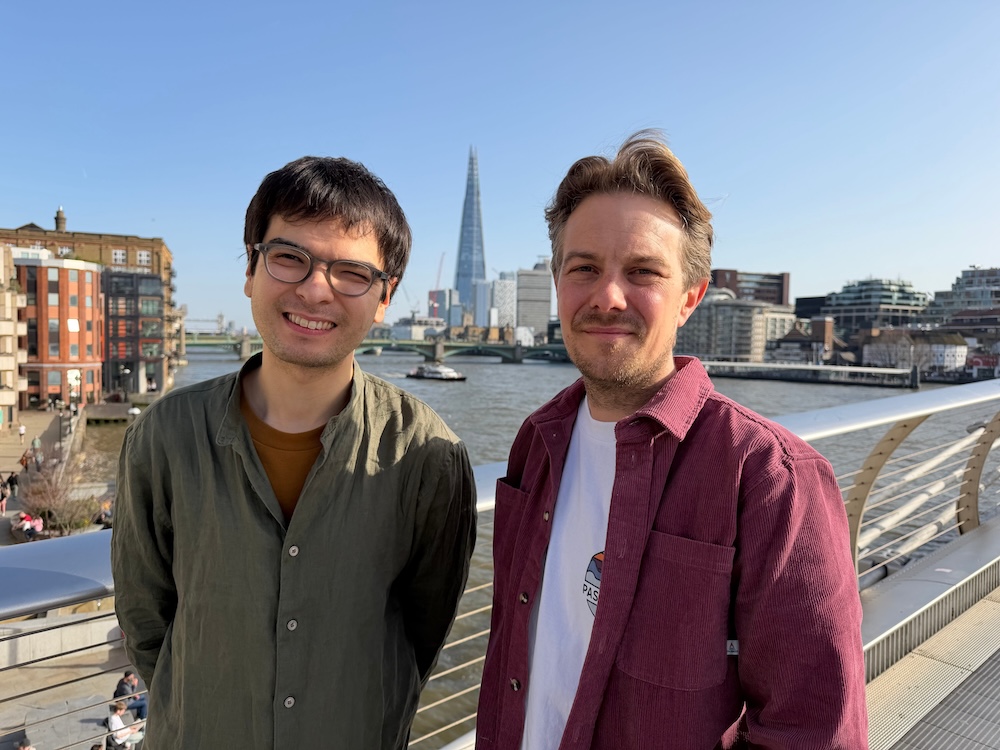
Ternary has raised £3.6m in seed funding to scale a new AI drug discovery platform designed to create molecular glue drugs.
Molecular glues are small drug molecules that force two proteins inside a cell to stick together. When they bind, they can switch off harmful proteins or restore lost function.
In theory, this approach could treat diseases that have defeated traditional drug discovery, including chronic inflammatory and neuroinflammatory conditions.
In practice, molecular glues have largely been discovered by accident. Scientists often stumble across them rather than design them.
Founded in November 2024, the London-based company has built an integrated platform that combines artificial intelligence, physics-based modelling and laboratory testing to design molecular glues deliberately and systematically.
The software predicts how proteins move and interact at the atomic level. It then proposes small molecules that could bring two specific proteins together in a controlled way.
Those predictions are tested rapidly in the lab, and the results are fed back into the system to improve the next design cycle.
The result, the company says, is a closed loop between computation and experiment that replaces chance with engineering.
The platform has already produced a pipeline of preclinical drug candidates aimed at inflammatory diseases where existing treatments are limited or ineffective.
Ternary has also signed multiple research collaborations with pharmaceutical and specialist biotechnology companies.
The seed round was led by European venture firm daphni, with participation from Pace Ventures, i&i Biotech Fund and the UK Innovation & Science Seed Fund, which is managed by Future Planet Capital.
Dr Chris Tame, co-founder and chief executive of Ternary Therapeutics, said: “For decades, molecular glues have been one of the most powerful ideas in drug discovery, but also one of the least predictable.
“We have shown that by combining physics-informed AI with tight experimental feedback, we can design these molecules intentionally rather than waiting to discover them by luck.
“The new capital will allow Ternary to expand our scientific and computational teams and advance our lead programmes towards clinical development.”
As part of its next phase, Ternary has appointed Dr Ian Taylor to its board of directors. Dr Taylor is a veteran of targeted protein degradation research and recently retired as president of research and development at Arvinas.
During his nine years at the company, he oversaw six Investigational New Drug submissions. One of those programmes, the oestrogen receptor PROTAC vepdegestrant, is currently under review by the US Food and Drug Administration and could become the first approved therapy of its kind.
Earlier in his career, Dr Taylor held senior roles at Pfizer Oncology and Bayer Pharmaceuticals. He earned his PhD in molecular biology and genetics from Harvard University and completed postdoctoral research under Nobel laureate Harold Varmus.
Cristian Pinto, investor at daphni, said the scientific ambition was clear from the outset: “Designing molecular glues predictably is one of the hardest challenges in modern drug discovery. It requires deep expertise across machine learning, physics and experimental biology. Ternary has built a platform that integrates all three in a disciplined and scalable way.”
The investment follows the recent launch of Daphni Blue, a €260m fund focused on science-led deep technology companies addressing major societal challenges.