


Interview: Advancing drug delivery with ultrasound technology
Opharmic Technology is advancing targeted drug delivery with the innovative use of ultrasound technology. Health Tech World speaks meets founder Langston Suen in Hong Kong to find out more.
Opharmic Technology has developed a non-invasive drug delivery system that harnesses low-frequency ultrasound technology to deliver drugs without invasive needles.
Targeting retinal diseases that currently require injection-based treatment, such as wet age-related macular degeneration (AMD), diabetic retinopathy and diabetic macular edema, Opharmic’s drug delivery system delivers drugs to the targeted area by pushing the drug molecules into the eye.
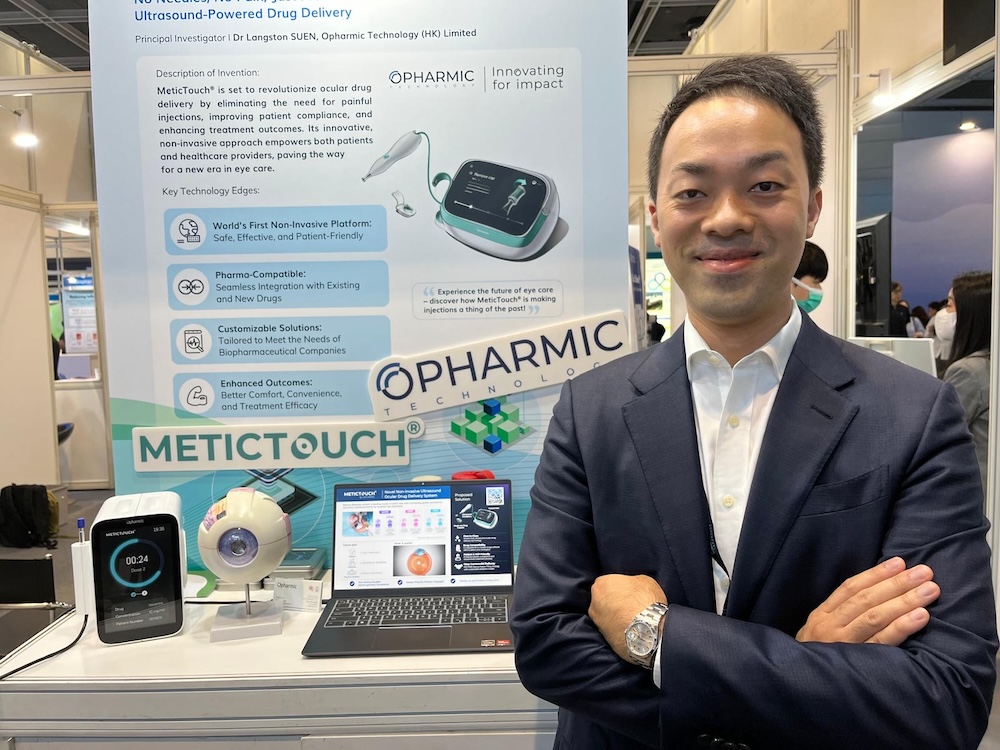
The company was spun out of Hong Kong University by founder Langston Suen (pictured above) in 2017; following his own experience of the benefits of targeted drug delivery when his mother was diagnosed with lung cancer.
How does it work?
Eye treatment injections can often be a complicated treatment, and up to 50 per cent of patients opt out of injection treatments due to their nature, leading to severe vision loss or blindness.
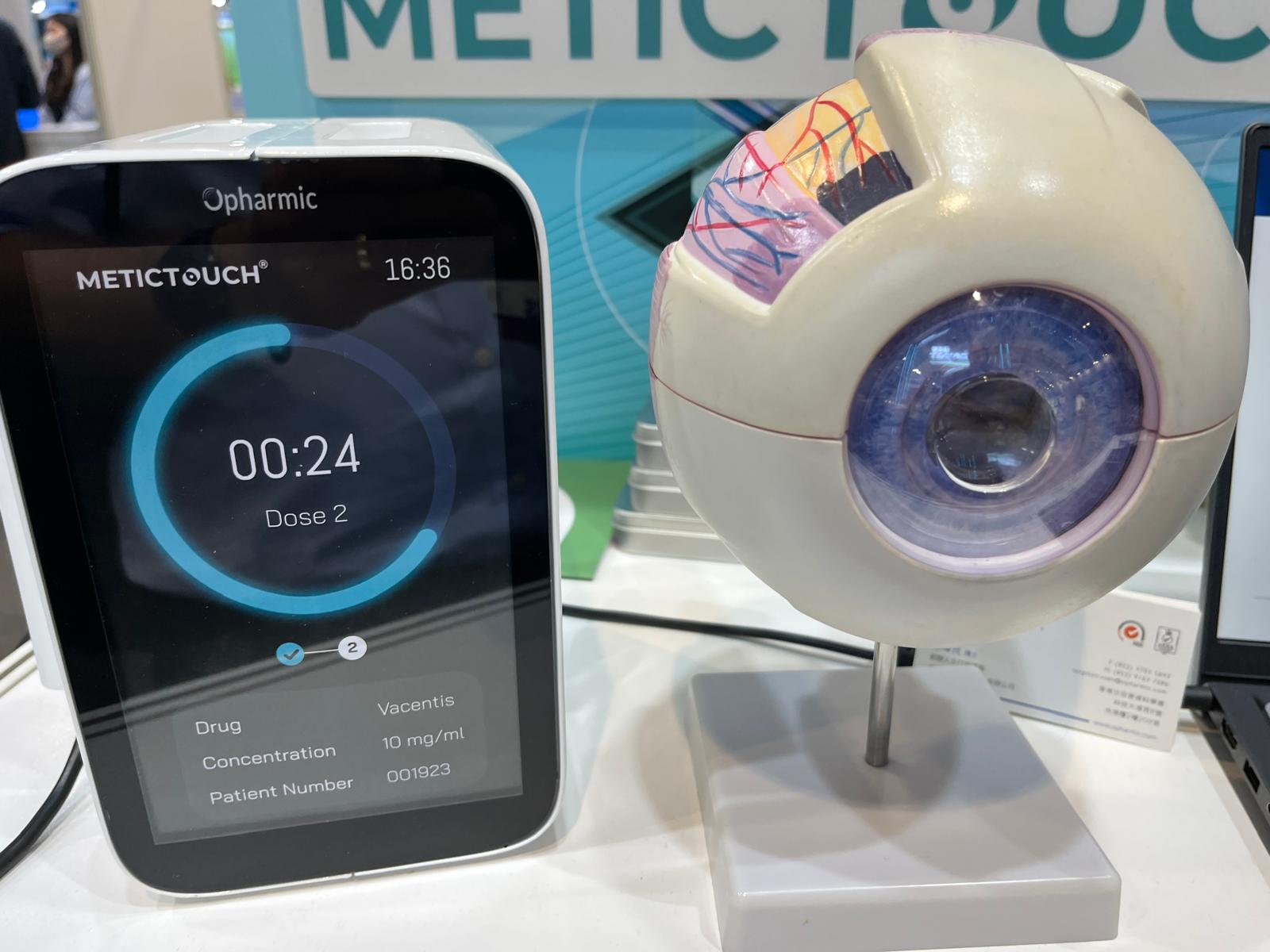
To help close this gap in treatment, Opharmic’s platform – called Metictouch – allows clinicians to carry out needle free treatment in one minute.
“What makes our technology truly novel is the use of low-frequency ultrasound to deliver large molecules, like antibodies, into the eye without using needles,” says Suen.
“Typically, for diseases like macular degeneration or diabetic retinopathy, patients must endure monthly intraocular injections for years.
“With our device, the process is completely needle-free. It’s as simple as gently touching the white part of the eye with the applicator for 10 to 20 seconds.
The ultrasound energy creates just enough force to push the drug molecules into the back of the eye with no wounds and no injections, but the same therapeutic effect.
“The breakthrough lies in the frequency. Most ultrasound technologies work at high frequencies, but we operate in a much lower range.
“This allows us to stimulate ocular tissues in a way that enhances drug absorption and transport across barriers that eye drops typically can’t cross. Eye drops usually only treat surface-level conditions like dry eye. They can’t reach the retina or deeper parts of the eye.
“Our technology changes that – it can deliver drugs to those hard-to-reach areas without invasive methods.
Clinical validation
Suen explains that the technology has now been validated in safety, efficacy, and pharmacokinetics through non-clinical studies involving both small animals and primates, and that the company will now be looking to advance into clinical trials.
“We’re aiming to begin clinical trials in partnership with our pharmaceutical collaborators within the next one to two years,” says Suen.
“If successful, we hope to see the product roll out globally, likely around 2028 or 2029 through our partners’ networks.
“Currently, there are no other effective drug delivery methods for these retinal conditions apart from intravitreal injections, which is exactly what we aim to replace.”
Improving patient access through commercialisation
Suen, who has a Ph.D. in Chemical and Nanoparticle Engineering from the Hong Kong University of Science and Technology, developed the ultrasound technology in a bid to improve patient outcomes and transform the way we administer medicines.
“Our most advanced non-invasive drug delivery platform is based on low-frequency ultrasound technology,” says Suen.
“The company is rooted in research I began during my undergraduate studies and continued through to my PhD. I started university in 2007 and began working on drug delivery research around 2008.
“Initially, my focus was on cancer treatment, but I eventually shifted toward ocular drug delivery. Since then, we’ve received equity financing and are now working toward commercialising the technology.
“Before founding the company officially, I represented the university in several international business competitions.
“We won a number of awards and, more importantly, gained invaluable feedback from doctors, investors, and other stakeholders. That input gave us strong direction on how to develop the business and bring the technology into real-world healthcare settings.
“We’re not yet fully commercial, but we’re well on the way. Our strategy involves partnering with pharmaceutical companies to bundle our delivery device with their drug products.
“The goal is to improve patient access and treatment efficacy by integrating our non-invasive delivery method directly into existing therapeutic pipelines.”
Suen says that the company is currently in active discussions with several pharma partners and to form strategic collaborations.
Health Tech World met Langston Suen at the Asia Summit on Global Health, facilitated by the Hong Kong Trade Development Council (HKTDC).