
By Ahmad Hussain, Reddie & Grose
The global wearable technology market has surged in the past decade, evolving from simple step-counters to sophisticated health-monitoring platforms capable of capturing a wide range of biophysical data.
Smart rings are a particularly fast-growing segment: valued at approximately USD 420 million today, the market is expected to exceed USD 2 billion by the early 2030s (Smart Rings Market Size & Share | Industry Report, 2033).
This rapid expansion in the smart ring market has inevitably intensified competition.
Fast innovation cycles and converging product designs have made the smart ring market fertile ground for IP disputes and commercial agreements.
Oura Health Oy, best known for the Oura Ring, have demonstrated firsthand how a comprehensive IP portfolio and an enterprising IP strategy can help to establish market dominance in a rapidly evolving sector.
Let’s take a look.
Putting the ‘P’ in IP
Oura have quickly built up a formidable IP portfolio.
However, this has been achieved by focusing on more than sheer number of filings but through an intentional effort to protect their products from various perspectives, and strategic patent acquisitions.
Different facets of protection that Oura have covered include:
- The ring-based form factor for physiological monitoring
- Sensor arrangements and configurations suitable for continuous wear
- Methods for collecting, processing, and transmitting biometric data
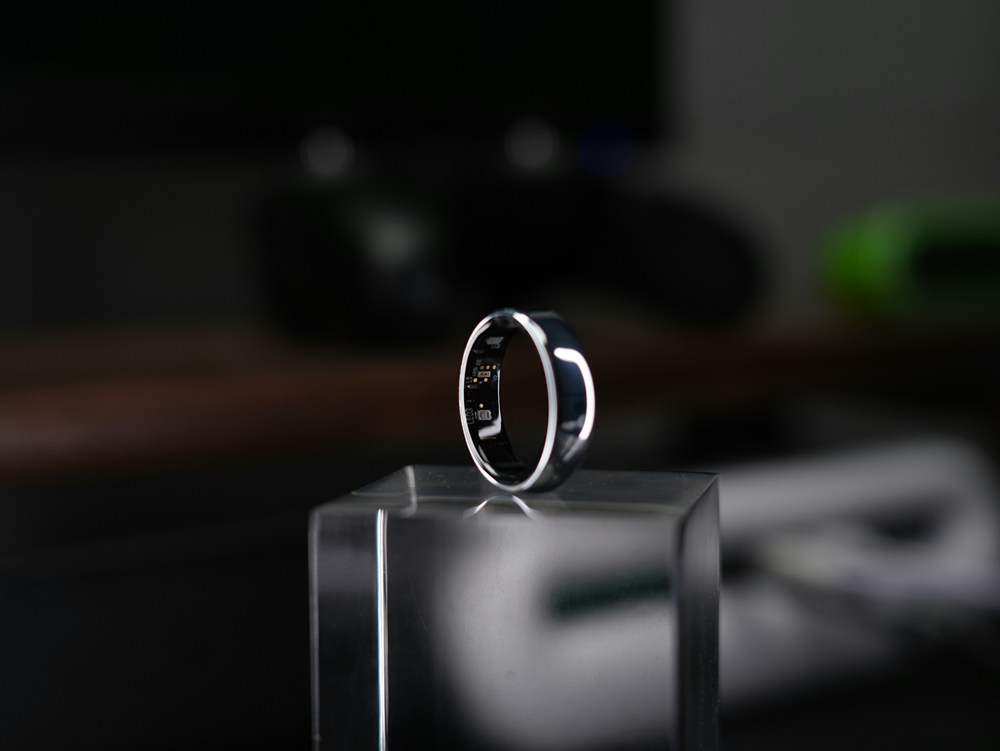
Among Oura’s most frequently asserted (and challenged) patents is US Patent No. 11,868,178 (US ‘178). US ‘178 relates to a wearable computing device having a ring-shaped form factor.
The scope of protection afforded by this patent is broad, with granted claim 1 defining little more than a ring comprising a battery, a PCB, and one or more sensors, all housed between an internal and an external housing.
What’s more, for such a commercially valuable patent it is interesting to note that US ‘178 was not filed by Oura but acquired later from Proxy (who had themselves acquired US ‘178 from Motiv!).
Here, Oura’s actions emphasize the often underappreciated ‘P’ aspect of IP that make it such a valuable and flexible asset to businesses.
Choosing the Battlefield

Ahmad Hussain
It will come as no surprise that the US makes up a sizeable percentage of the smart ring market.
As such, it is equally unsurprising that so much of Oura’s disputes are centred around the US market.
Of more interest is where in the US Oura has launched their claims.
The US offers patent proprietors a choice of venues through which to litigate disputes.
Federal district courts hear claims for monetary damages against domestic competitors, whilst the US International Trade Commission (USITC) is the go-to for claims relating to the import of infringing articles.
Each venue has their own pros and cons, and Oura have used both to good effect. However, its recent favourable USITC rulings that have launched Oura into an especially dominant position.
In March 2024, Oura filed a USITC action against Indian-based UltraHuman and Chinese-based RingConn, seeking exclusion orders to block allegedly infringing products from entering the US (A Timeline of Oura’s Patent Wars – Garmin Rumors).
Central to this action was US ‘178 – Oura initially asserted a number of patents but eventually reduced their case to infringement of just claims 1, 2, and 12-14 of US ‘178.
Following standard procedure, the respondents countered that the asserted claims were invalid for being obvious over the available prior art, but they were unable to persuade the USITC of this reasoning.
In August 2025, the USITC issued a Limited Exclusion Order and Cease and Desist against both UltraHuman and RingConn, ostensibly preventing future US imports of their products (Oura Secures Decisive Legal Victory with ITC Patent Ruling – The Pulse Blog).
RingConn, however, have since entered into an extensive licensing agreement with Oura, resulting in the continued availability of RingConn’s ring in US stores.
As of yet, no such agreement appears to be in place with UltraHuman.
Escalation and Retaliation
With a favourable USITC ruling in their back pocket, Oura have recently gone a step further by launching both USITC and District Court actions against a new swathe of competitors – including household names Samsung and Reebok (Oura Files Multiple Legal Actions Against Samsung, Reebok, Zepp Health, and Nexxbase Over Health Ring Tech – Garmin Rumors).
Unsurprisingly, such widespread assertion of Oura’s rights has led to retaliation.
Ultrahuman are currently suing Oura at the Delhi High Court over various claims of infringement, Samsung is alleging infringement by Oura at the US District Court level, and Samsung have also been challenging US ‘178 through the USPTO’s post-grant review procedure.
In a win for Oura, the US Patent Trial and Appeal Board (PTAB) recently found that Samsung’s claims of obviousness against the majority of US ‘178’s claims fell short, with all but claims 17 and 18 being maintained (PGR2024-00030 | Samsung Electronics Co Ltd v. Oura Health Oy | Ex Parte).
However, this dispute is not ending any time soon – Samsung has recently appealed the PTAB’s decision to the Court of Appeals for the Federal Circuit (CAFC) (26-1258 | Samsung Electronics Corp Ltd v. Ouraring Inc | Ex Parte).
Lessons for Innovators
What do we learn from all this activity?
As things stand, Oura have built up an enviable market position by curating and asserting a strong IP portfolio.
However, with validity proceedings over US ‘178 only just beginning at the CAFC, there may yet be many more twists in the road.
What is certain, however, is that IP generally, and patents specifically, are more crucial than ever to the development of a resilient business strategy when it comes to evolving technological markets.
Oura’s use of all the levers IP has to offer – including assertion, purchasing, and licensing of rights – makes this abundantly clear and their willingness to be a first mover has led to a market leading position.
To put it more succinctly, Oura demonstrated that if you don’t act, your competitors will.
At Reddie & Grose we have a team of leading IP professionals with deep expertise in wearable technology and the broader medical device field (and much more aside!). If you are interested in strengthening your business through IP, then we would love to hear from you.