

From Patient Zero to the world’s largest living patient registry in sickle cell disease

It began with one patient.
One story. One mission. One urgent need to do better.
From that single spark, Sanius Health set out to change the way sickle cell disease is understood, treated and supported. What started as a small mission to accelerate research, discover new medicines, and improve health outcomes has grown into a global movement, driven by patients, carers, clinicians, researchers, and partners who refused to accept the status quo.
Today, Sanius is humbled to say that it has built the world’s largest living patient registry in sickle cell disease and associated malignancies. Not just a database, but a dynamic, real-time ecosystem co-created with the people who matter most – patients and the professionals who support them.
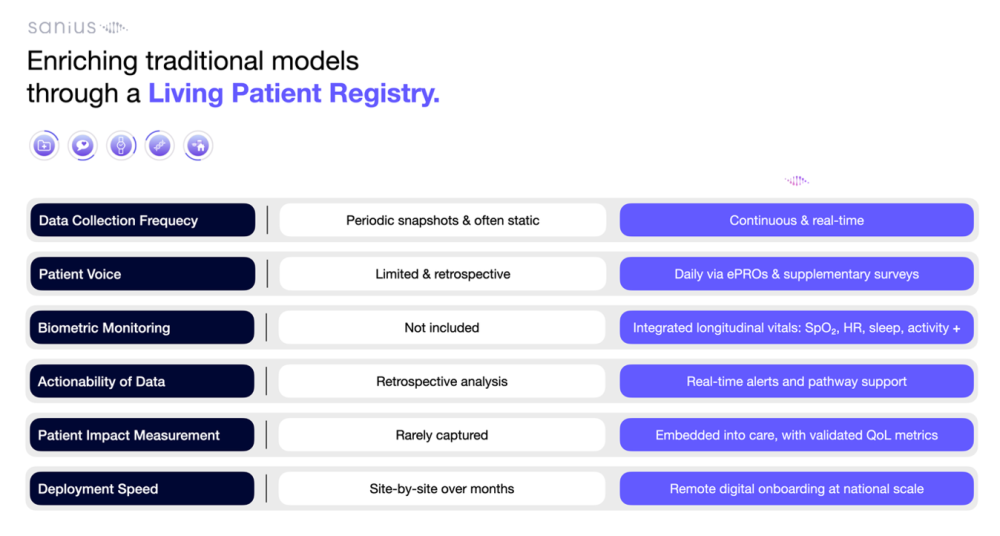
Unlike conventional registries that rely on static, retrospective snapshots, Sanius Health’s living patient registry captures continuous, real-time, and multidimensional data – empowering clinical teams, researchers and system planners to act on dynamic signals, not outdated reports.
While traditional models often silo patient-reported outcomes, medical records, and biometric monitoring, Sanius brings these together in a secure, unified ecosystem that reflects the full patient experience.
This has allowed for faster insights, earlier intervention, and more meaningful impact through a model that isn’t just improving outcomes, but redefining what a registry can do for patient care, discovery, and equitable access.
Along the way, the organisation has seen incredible things happen.
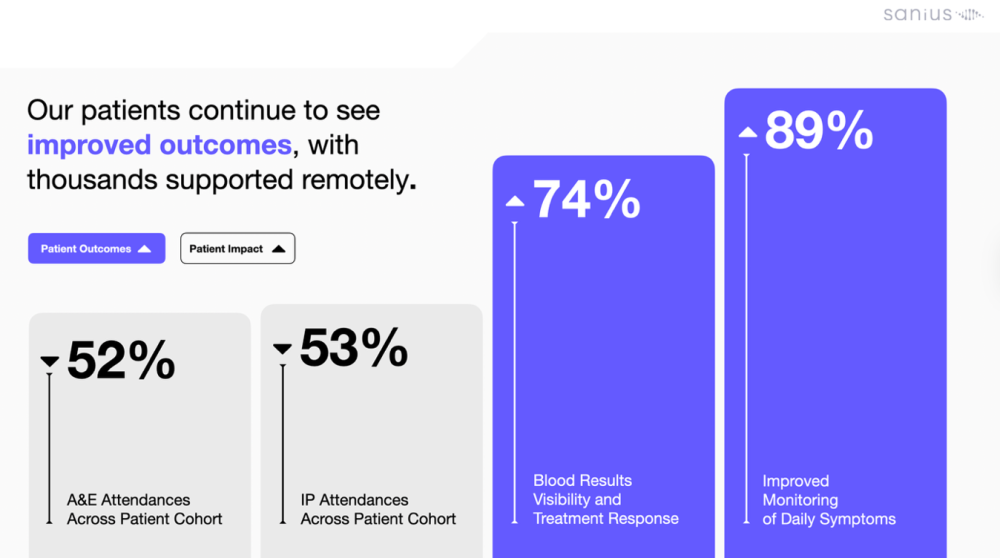
Patients who once felt invisible now feel heard. Clinical champions from across the NHS and around the world have helped us reimagine care. Together, Sanius has supported new pathway redesigns that have reduced unnecessary A&E visits and significantly cut hospital stays. That’s not just data. That’s time back with family, less pain endured, fewer moments lost to suffering.
To the patients and families who have joined Sanius, you are not just data points – you are pioneers. Many have shared how engaging with the ecosystem has helped them take control of their condition, anticipate periods of poor health, and reduce emergency admissions. As one patient described:
“I am monitoring my health a lot better and taking initiative… I feel more responsible, more mature and confident when it comes to my health.”
With greater visibility into their health data and support from both clinical teams and the wider community, patients are no longer reacting to crises – they’re shaping their own care journeys. Stories like these continue to drive everything Sanius does as a community.
And thanks to this growing community, Sanius has helped accelerate evidence generation for emerging therapies, enabling smarter, faster, and more inclusive innovation. These aren’t abstract wins, they’re real steps forward in the fight for equitable, effective care for sickle cell disease worldwide.
Sanius Health’s work has already supported evidence submissions across first-in-class therapeutic classes within the sickle cell space and enabled early signal detection for efficacy and safety trends through continuous patient-reported and clinical data capture.
The organisation is now laying the groundwork for country-level insights to support HTA engagement and reimbursement in multiple regions.
Critically, life science partners in the therapeutic development and innovation space working with us have gained rapid, ethically governed access to longitudinal, real-world data to inform global regulatory filings and accelerate post-marketing commitments.
The company’s ASH 2024 submission showcased an updated VOC prediction model built on over 1.2 million datapoints across 399 patients, achieving 92 per cent sensitivity in predicting VOCs using passively collected biometric and behavioural data, creating a powerful framework to support pre-emptive treatment timing and real-world companion diagnostics.
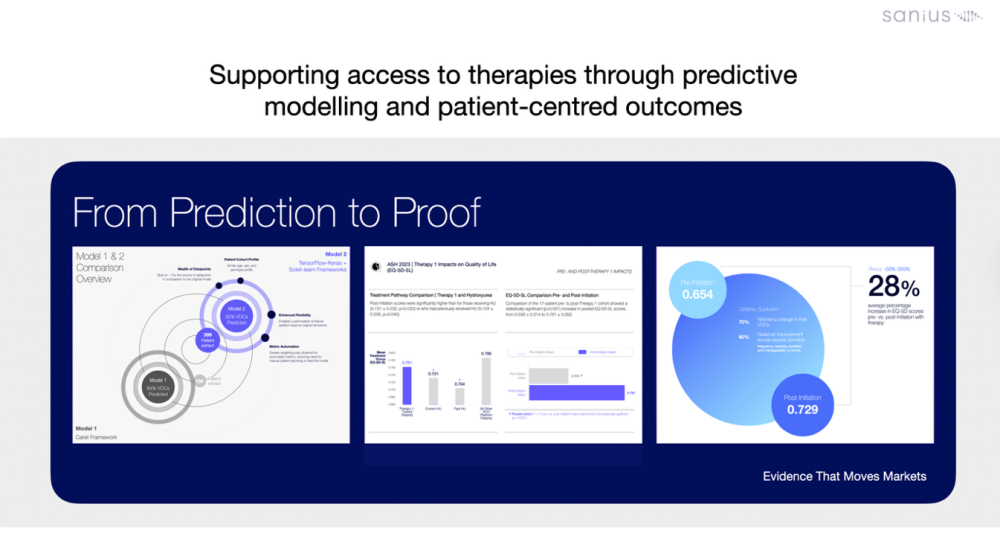
Meanwhile, data presented at EHA 2023, ASH 2023, and EHA 2024 evaluated the impact of novel and first-in-class sickle cell treatments in real-world UK settings.
These observational data extracts captured up to 28 per cent improvements in EQ-5D scores, reductions in transfusion dependency from 45 per cent to 9per cent, and statistically significant increases in activity and sleep metrics via wearable monitoring.
For another treatment, and across patients reporting new treatments, 60 v experienced a meaningful reduction in VOC severity, intensity, or frequency, with several reporting a prevention of hospitalisation during crises.
Together, these findings have been important additions to the RWE base in support of global access dossiers, reimbursement cases, and post-marketing evidence plans, offering regulators and HTA bodies real-world insights on patient-centred outcomes beyond clinical trial efficacy.
For researchers, clinicians, and patients, the Sanius Health ecosystem is also reshaping what longitudinal support looks like.
At ISPOR 2025, the organisation’s abstract – ranked in the Top 5 per cent of all submissions globally within this category – demonstrated a 49–81 per cent reduction in annual VOC rates in patients engaged in the digital ecosystem for up to three years, with sustained self-reported compliance across all cohorts.

Sanius Health’s EHA 2025 abstract, developed in partnership with Pharma leaders in the sickle cell space, revealed real-time physiological shifts, such as night-time drops in SpO₂ and respiratory rate, emerging up to 48 hours before hospitalised VOCs, offering clinicians powerful new early indicators for admission prevention and proactive community management.
Moreover, the company’s findings from real-world patient workshops and longitudinal data tracking, presented at EHA 2024, mapped prodromal VOC signs across 83 patients, reinforcing the critical role of wearable monitoring and patient-led reporting in predicting and preventing crises.
What’s even more powerful? Sanius is just getting started.
The organisation now has the largest waiting list of patients and families across multiple countries, with new patients being onboarded daily.
From the UK to the US, and across Europe, India, Africa and South America, engagement continues to grow beyond anything the team could have imagined.
This isn’t about scale for the sake of scale, it’s about scale with soul.
Every new family that joins brings a story, a struggle, and a hope that fuels the team’s drive.

If you are working to improve sickle cell care, whether in a hospital, community clinic, or policy body, this platform is here for you.
Across hospitals, community clinics, research institutions and policy forums, the organisation is already working alongside consultants, guideline authors and system leaders to ensure that SCD care is proactive, equitable, and centred on what matters to patients.
From real-time dashboards to reimagined urgent care models, the company’s partnerships are driving proactive, equitable solutions tailored to local needs.
To Sanius Health’s extraordinary patient coaches, clinical leads, CNSs, pharmacists, researchers, patient organisations, grant partners and industry allies, the team thanks you.
Your work, your trust, your belief in what’s possible have turned a small mission into an award-winning AI-powered ecosystem that is now improving lives across the world.

And to anyone reading this who feels the call to be part of something bigger, something meaningful and urgently needed, the Sanius team would love to connect. Whether you’re a clinician, policymaker, innovator or simply someone who cares deeply about health equity, sickle cell disease, or the future of data-driven patient support, there is a place for you here.
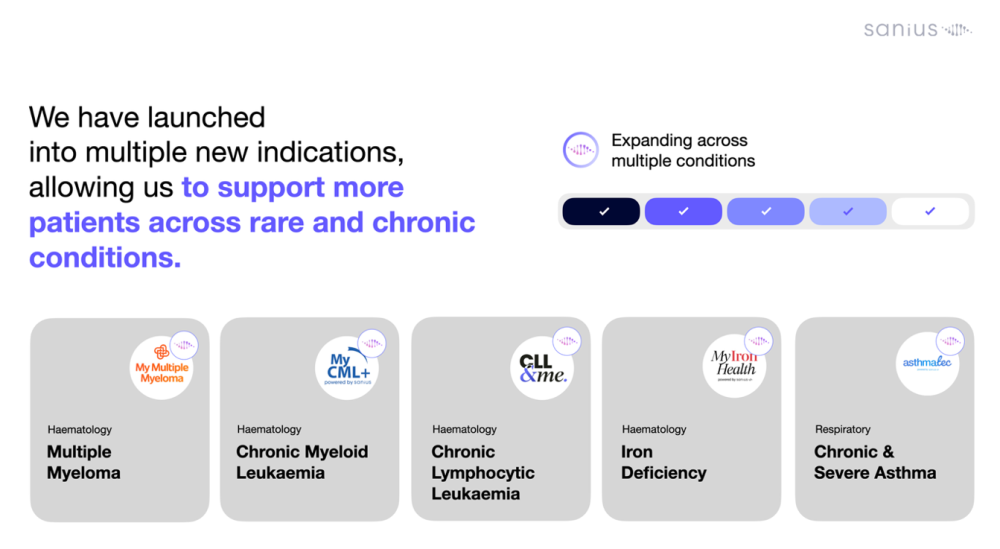
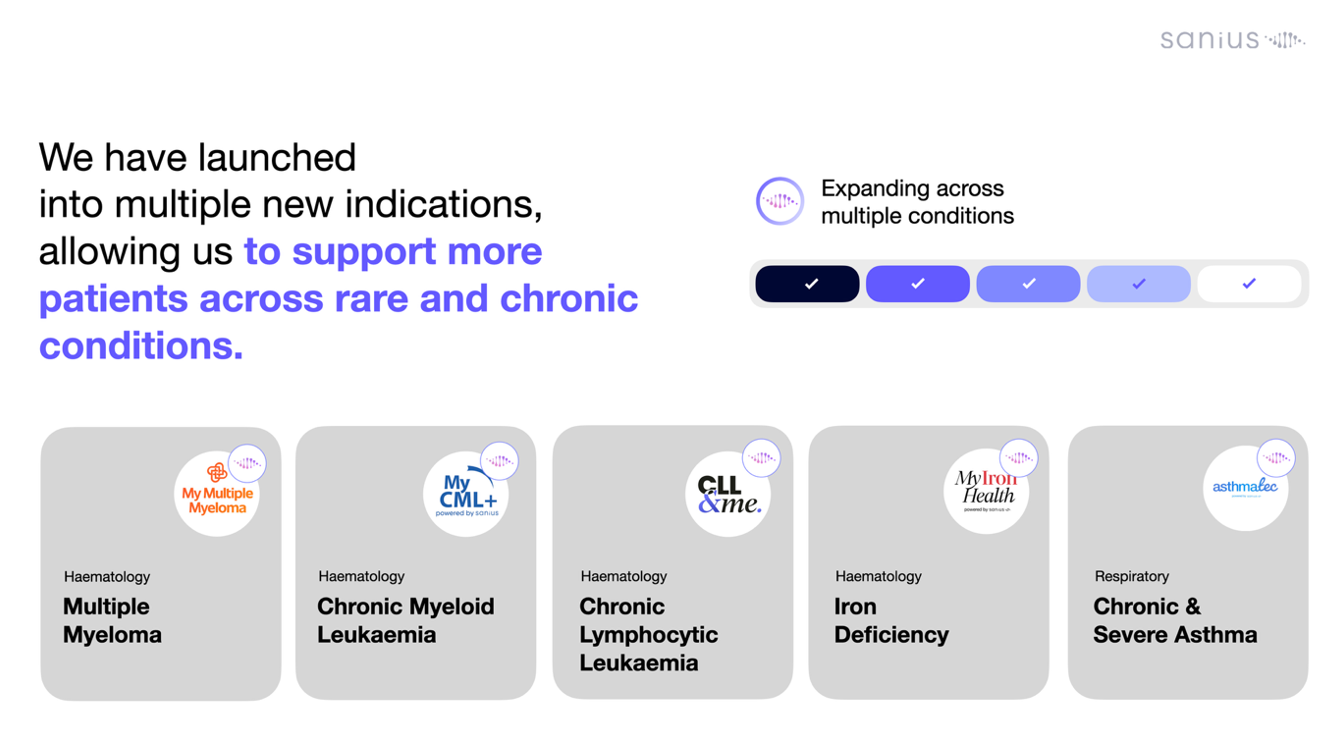
Critically, while sickle cell disease remains Sanius Health’s largest programme, the ecoystem’s living registry infrastructure is now active across multiple rare and ultra-rare indications, including rare metabolic diseases, myeloma, myeloproliferative neoplasms, haemophilia, and asthma. Each condition benefits from the same patient-led, real-world model, tailored to the specific needs of each patient community. With new indications on the horizon, Sanius Health’s goal is to ensure any patient who could benefit does, and that the teams that support their care are in turn supported with better RWE and patient-centred innovation.
Sanius is not just building technology. They are building trust. They are building bridges. They are building the future of care.