By Sanius Health
As advanced cancer therapies continue to move from research into routine care, attention is increasingly turning to how these treatments are experienced by patients in everyday life.
Therapies such as CAR-T have transformed outcomes for many people with blood cancers, but they can also bring significant challenges, particularly around safety and predictability during treatment.
It is within this context that RISE (Reducing Immune Stress from Excess Cytokine Release in Advanced Therapies) has been launched.
RISE is a UK-wide public–private consortium focused on improving how advanced therapies are delivered, monitored and supported for patients.
Sanius Health is pleased to be working alongside clinical, academic and industry partners as part of this collaborative programme.
Led by The Christie NHS Foundation Trust and The University of Manchester, and supported by the Medical Research Council (MRC) Prosperity Partnership Award, the programme brings together clinicians, researchers, patient partners and industry collaborators across the UK.
Industry partners include Poolbeg Pharma, Johnson & Johnson, Randox Laboratories and Sanius Health, all working towards a shared goal of making advanced cancer treatments safer and more accessible.
While immune cell therapies such as CAR-T are already extending survival for many people with blood conditions, some patients experience serious and sometimes life-threatening side effects, including immune-related reactions and neurological complications.
These can result in prolonged hospital stays and significant uncertainty for patients and families, and may also limit who is able to receive treatment.
Over the coming years, the programme will focus on improving understanding of these challenges and supporting earlier identification of risk during treatment.
A key part of this work recognises that changes in how patients are feeling often occur between clinical appointments.
Subtle shifts in symptoms or day-to-day wellbeing are frequently noticed by patients themselves before they are picked up during routine assessments.
By capturing this information in a more structured and continuous way, there is an opportunity to support earlier and more informed clinical decision-making.
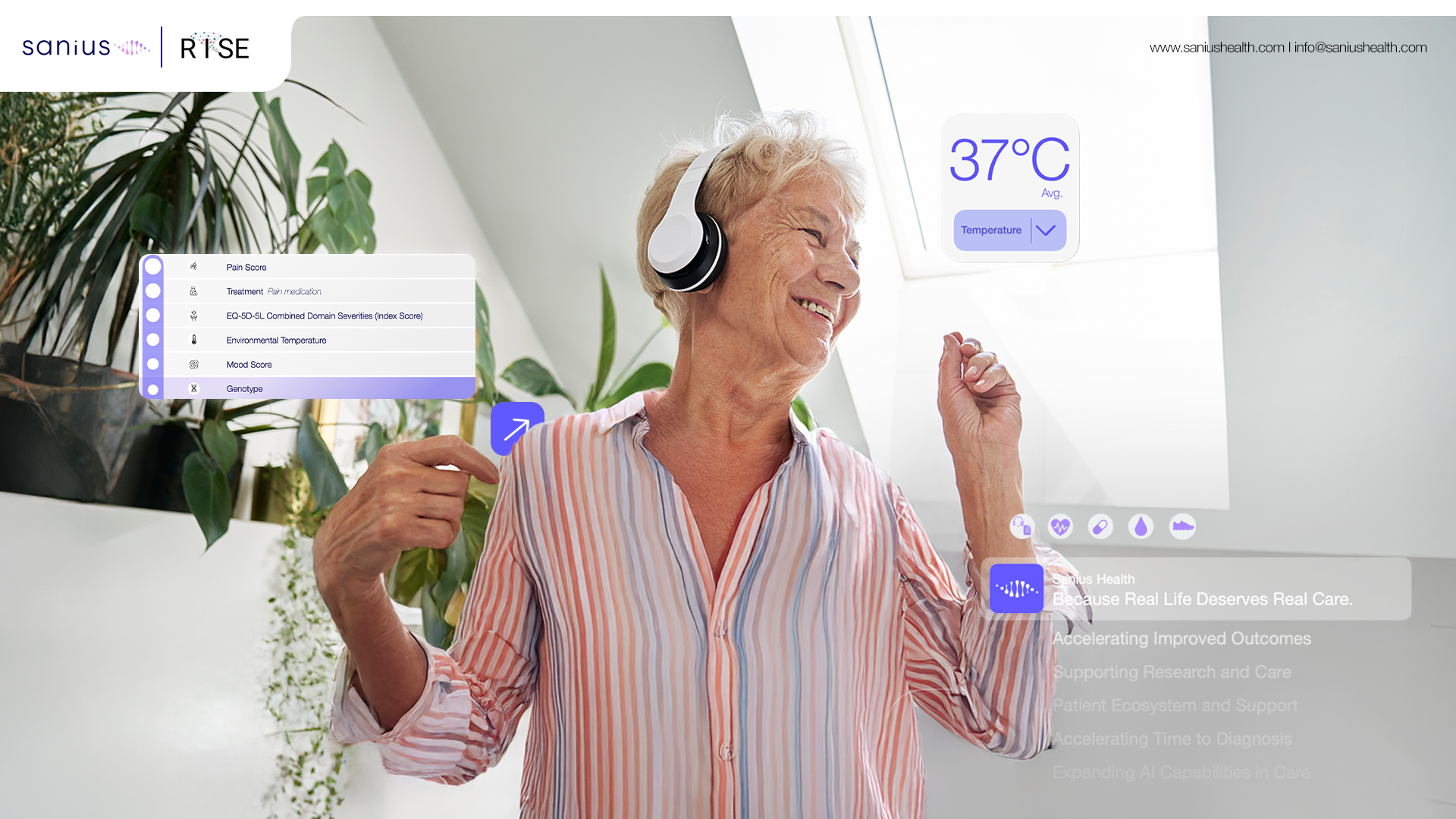
Within the programme, digital monitoring tools and patient-reported outcomes will be used alongside standard care to provide additional context on how patients are responding to treatment over time.
More broadly, this work reflects a shared understanding that improving safety in advanced therapies cannot be achieved by any single organisation alone.
Progress depends on close collaboration across the NHS, academia, industry and patient communities.
Through this collective approach, partners are working to establish a framework that can help inform future research, clinical practice and care pathways.
For patients, the long-term aim is clear: safer treatment journeys, fewer severe complications, and greater confidence when accessing safe therapies.
For healthcare teams, this work offers improved visibility into patient experience during treatment and additional insight to support care decisions.
Sanius Health is proud to be contributing to RISE as part of this wider collaborative effort.
Programmes like this demonstrate what is possible when clinical expertise, patient experience and real-world data are brought together with a shared focus on patient safety.
As the programme progresses, we look forward to continuing our work alongside partners across the NHS, academia and industry.
To learn more about the work we do at Sanius Health to support patient monitoring and safety in advanced cancer treatments, please get in touch with us at [email protected]

 Letting clinicians get back to care: How SpeechAmbient is changing the documentation story