


AI

Technological advancements in medicine are at the forefront of transforming the healthcare system. Today's concept of smart medicine has greatly improved patient care and satisfaction. For instance, innovations such as digital twins (DT) allow healthcare institutions to improve patient experiences through quality of care delivery. With the help of a development team, you can create [...]

A deep learning AI model that was developed using only mammogram image biomarkers accurately predicted both ductal carcinoma in situ (DCIS) and invasive carcinoma, according to a new study. The model also showed no bias across multiple races. Traditional breast cancer risk assessment models use information obtained from patient questionnaires, such as medical and reproductive history, [...]

New research sheds light on how AI stacks up against human decision-making in peronsalised cancer treatment. Treating cancer is becoming increasingly complex, but also offers more possibilities than ever. AI is expected to play a critical role in advancing the field, assisting with the laborious and time-consuming data analysis and interpretation that is required for [...]

Researchers in the US have developed an AI model based on epigenetic factors that is able to predict patient outcomes successfully across multiple cancer types. The researchers found that by examining the gene expression patterns of epigenetic factors in tumours, they could categorise them into distinct groups to predict patient outcomes across various cancer types [...]

For the first time, a physical neural network has successfully been shown to learn and remember ‘on the fly’, in a way inspired by how the brain’s neurons work. The study opens a pathway for developing efficient and low-energy machine intelligence for more complex, real-world learning and memory tasks. Lead author Ruomin Zhu is a [...]

A new mission announced by the UK Prime Minister will accelerate the use of AI in life sciences to tackle major health challenges. In a speech on Thursday 26 October, Prime Minister Rishi Sunak announced that £100 million in new government investment will be targeted towards areas where rapid deployment of AI has the greatest [...]

Researchers have developed a new AI–based tool for estimating a newly diagnosed cancer patient’s chances for surviving long term. Currently, estimating survival rates for patients with cancer primarily depends on their cancer stage. However, a new study presented at the American College of Surgeons (ACS) Clinical Congress 2023, aimed to identify the patient, tumour, and [...]
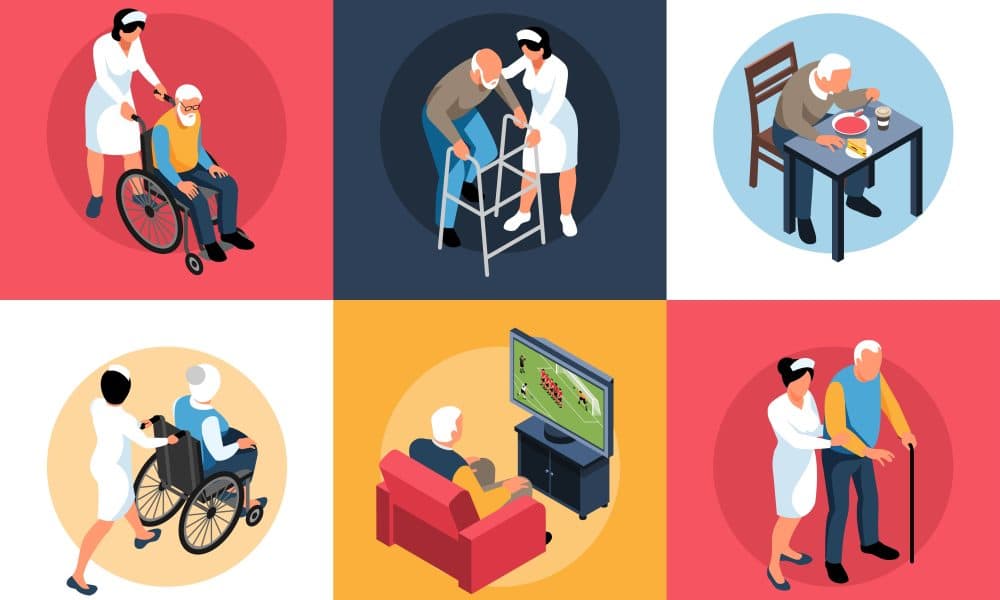
Health Tech World speaks to MatrixCare general manager Bharat Monteiro about the ever-increasing role of AI in senior care. As the ageing population continues to grow, senior care faces a unique set of challenges, from staffing shortages to financial strains. Although often overlooked in the senior care sector, AI is set to be at the [...]

The UK government should offer tax breaks for businesses developing AI-powered products and services, or applying AI to their existing operations, to “unlock the UK’s potential for augmented productivity”, according to a new University of Cambridge report. Researchers argue that the UK currently lacks the computing capacity and capital required to develop generative machine learning [...]

Researchers at the UCL Institute for Neurology have developed new tools, based on AI language models, that can characterise subtle signatures in the speech of patients diagnosed with schizophrenia. The study, published in the journal PNAS, aims to understand how the automated analysis of language could help doctors and scientists diagnose and assess psychiatric conditions. [...]