


Europe

Following the announcement of a national collaboration with the Greek government, Sword Intelligence is bringing AI-led triage, care coordination and access operations to help the UK tackle waiting lists and access pressure. Sword Intelligence has launched in the UK and Europe to bring AI-led care operations designed to help healthcare providers improve access, manage demand [...]

By G2 Speech Walk into almost any clinical consultation and you’ll notice a familiar setting: a clinician carefully balancing their attention between the patient in front of them and the screen beside them, capturing notes as the conversation unfolds. This has become such a natural part of care that it’s rarely questioned. In speaking with [...]

By Johanna Kelly, chief nursing information officer, Maidstone and Tunbridge Wells NHS Trust Clinicians are all too familiar with the daily frustrations of fragmented systems, multiple logins and passwords, and click-heavy workflows. As stress and burnout continue rising, especially in high-pressure environments like emergency medicine, the usability of Electronic Patient Records (EPRs) has never been [...]

By Alasdair Craine While tech CEOs promise AI domination, Britain’s health service loses the leader who actually knew how to deliver it On Tuesday, many of us woke to headlines announcing a proposed merger between SpaceX and xAI, a deal spoken about in trillion-pound terms and framed as the creation of a new industrial titan. Rockets, satellites, supercomputers [...]

Over-60s health startup Lateral has secured £2.5m in seed funding from UK backers. The funding round was led by UK fintech investor Augmentum with support from Triple Point and TinyVC. Lateral, a nine-strong team, said it has identified a gap in the market among the over 14m people in the UK aged 60 [...]

Cancer patients in England are being denied new radiotherapy due to a postcode lottery in NHS funding and commissioning, doctors warn. Patients are missing out on two newer forms of radiotherapy, which are effective against several cancers and widely available in other countries, because of what clinicians describe as red tape and lack of funding. [...]

By Curtis Grainge Leadership in the NHS is rarely loud, often thankless, and almost always tested in moments of uncertainty. It is defined less by announcements than by endurance: the ability to hold a steady course while institutions shift, pressures mount and expectations continue to rise. Against that backdrop, Ming Tang, Chief [...]
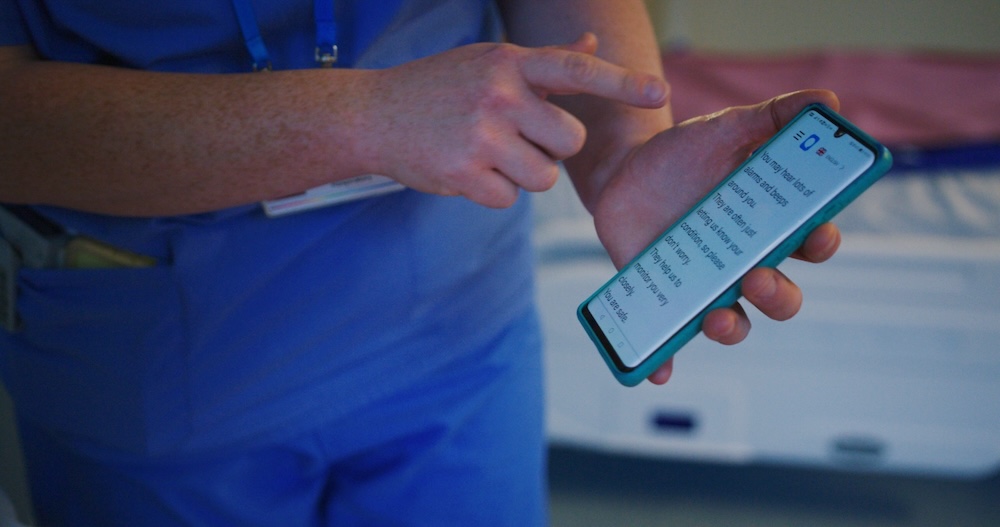
Doncaster and Bassetlaw Teaching Hospitals NHS Foundation Trust has launched a new 12 month pilot of CardMedic, a clinically validated app designed to transform communication with patients across any barrier – whether language, visual, hearing or cognitive impairment. The initiative, funded by the Doncaster and Bassetlaw Teaching Hospitals Charity, aims to reduce health inequalities by [...]

Automata has raised US$45m in a series C round to accelerate its lab automation platform for life sciences. The London-based company is building fully integrated, AI-ready platforms that combine modular robotics, orchestration software and unified data infrastructure to turn physical labs into programmable systems. The company said the funding will be used to scale customer [...]

Almost two in three Britons, or 59 per cent, now use AI self-diagnosis to check health conditions, new research suggests. The findings point to more people using tools such as ChatGPT to build their health knowledge and attempt self-diagnosis, as average GP waiting times reach 19 days. Searches for "what is my illness?" have increased [...]