



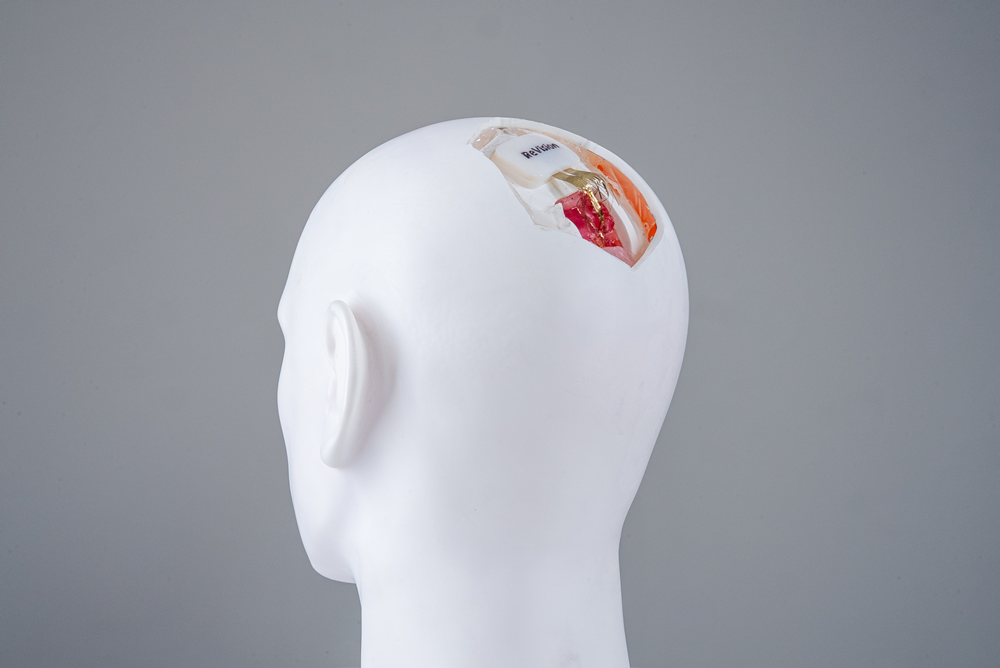
ReVision Implant has secured €4m in funding for its brain implant for severe blindness, as it moves from preclinical development towards first-in-human studies.
The Belgian neurotechnology company said the oversubscribed funding round from private investors marks a key step in its transition from preclinical development to clinical exploration.
The round included both existing investors and new backers, including European business leaders and medtech operators.

Frederik Ceyssens, chief executive of ReVision Implant, said: “This funding round marks an important step as we move from development towards clinical and operational scale-up.
“We are investing in our own cleanroom environment to bring important manufacturing steps in-house, while expanding our team and advancing our regulatory compliance and clinical programme over the coming years.
“At the same time, we are continuing product development and strengthening our collaborations with other medtech companies as we move closer to bringing our technology to patients.”
The funding builds on ReVision Implant’s existing support from public programmes, including European Innovation Council grants such as the €2.4m FlairVision project.
The company is also supported by the Plug & Play and imec istart incubators.
ReVision Implant is developing a cortical visual prosthesis designed to restore functional vision in people with severe blindness, including those who cannot benefit from retinal or optic nerve-based therapies.
A cortical visual prosthesis is an implanted device that connects directly with the brain’s visual cortex, the part of the brain that processes sight.
By interfacing directly with the visual cortex, the system is designed to bypass damage to the eye and optic nerve and help patients perceive and interpret visual information.
The company has already begun setting up its own cleanroom facilities, which it started developing three months ago.
Cleanrooms are controlled environments used to manufacture medical devices while limiting contamination from dust, microbes and other particles.
The move is intended to give the company greater control over manufacturing and quality processes as it prepares for clinical trials.
ReVision Implant said its recent advances reflect growing momentum in high-bandwidth neurotechnology.
High-bandwidth neurotechnology refers to systems that can transmit large amounts of information between technology and the nervous system, including the brain.
The company said improved ability to interface directly with the brain could support devices for conditions including quadriplegia, locked-in syndrome, amputations, aphasia and blindness.
Quadriplegia is paralysis affecting all four limbs, while locked-in syndrome is a condition in which a person is conscious but unable to move or speak.
Aphasia is a language disorder that can affect speech, understanding, reading or writing.
Following its recent Breakthrough Device designation from the US Food and Drug Administration, ReVision Implant is preparing for first-in-human studies, with the first phase having received regulatory approval and scheduled for the third quarter of 2026.
Together with this latest funding, the company said it is now positioned to take its next steps.
 Phoenix Hospital Group launches AI-powered MRI health screening for executives