



NEX Health Intelligence raises €1m to predict hospital infection spread with AI
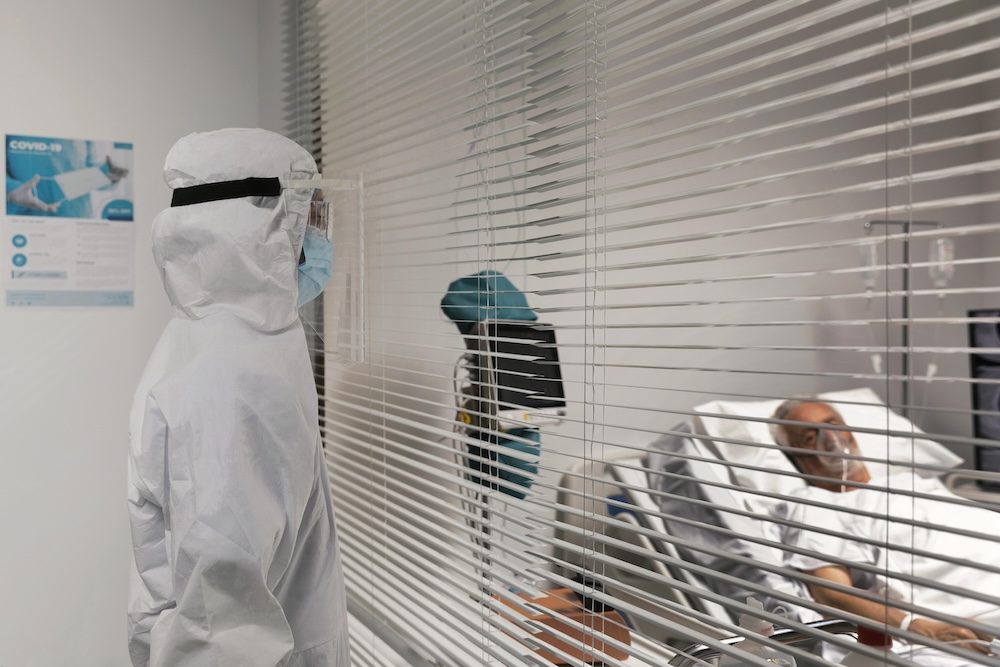
NEX Health Intelligence has raised €1m in pre-seed funding to develop AI that predicts hospital infection spread before it moves between patients and wards.
The company applies artificial intelligence and advanced mathematical modelling to help hospitals detect, predict and prevent highly resistant infections before they spread between patients and wards.
Founded in 2022 by Dr Ashleigh Myall during his PhD studies, the healthcare AI startup was created at Imperial College London.
The investment round was led by Brighteye Ventures.
Dr Myall said: “I realised the real challenge wasn’t just the number of admissions, it was how quickly infections spread between vulnerable patients already inside hospitals.
“So, during my PhD at Imperial, I began building AI systems to predict where infections would spread next. That became the foundation for NEX.
“Imperial’s enterprising ecosystem has been critical to NEX’s journey.
“As a first-time founder, the programmes, mentors and support network gave me the advice and confidence I needed to take the research out of the lab and begin building a company around it. We’re incredibly grateful for that support.”
The platform creates contact networks from routinely collected hospital bed records, identifying variables that can predict where transmissible infections are likely to spread days in advance.
Hospitals can then take preventative action, including isolating patients and reallocating resources more effectively.
Healthcare-associated infections are infections patients acquire while receiving medical care, including during a hospital stay.
According to the World Health Organization, one in 10 patients admitted to hospital acquires a healthcare-associated infection during their stay, contributing to longer hospital stays, operational disruption, avoidable deaths and billions in annual healthcare costs.
Dr Myall became interested in infection transmission while volunteering in hospitals during the Covid-19 pandemic.
During his PhD at Imperial College London, he began developing AI systems designed to predict how infections move through hospitals, which became the technological foundation for NEX.
Professor Mauricio Barahona, who supervised Dr Myall’s PhD research in the department of mathematics at Imperial College London, said: “The research applied new mathematical techniques to understand how infections transmit through hospitals, uncover hidden links between patients and wards, and predict where infections may move next.”
NEX Health Intelligence also benefited from Imperial College London’s entrepreneurial ecosystem.
The founders took part in several programmes, including the Venture Catalyst Challenge, MedTech SuperConnector, Summer Accelerator, Imperial Venture Mentoring and a Venture Trek mission to Singapore.
The current funding round was launched during Imperial’s 2025 investor showcase.
With €1.4m raised to date, NEX is already working across multiple hospital sites.
In the UK, evaluation work is under way across two London NHS trusts, alongside a deployment in north-west England.
Internationally, the platform has been deployed at a major military hospital in Southeast Asia and is expanding through regional projects, including at one of Malaysia’s largest public hospitals.
The newly raised capital will be used to expand deployments across UK and international hospitals, complete UK regulatory and clinical safety work and generate real-world clinical and economic evidence from live hospital environments.
Ben Wirz, founding partner at Brighteye Ventures, said: “AI has the potential to enable intelligent decision support in high-stakes environments, enabling healthcare teams to act faster and allocate resources smarter, fundamentally transforming how clinical teams work.”
 System C sets out 12-month AI roadmap spanning emergency, maternity and social care