



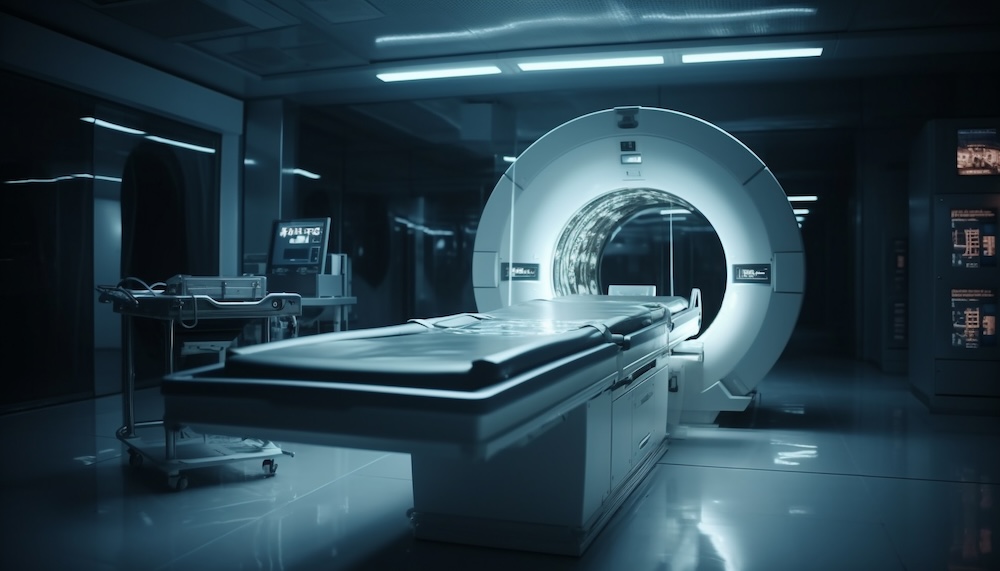
An AI body tool used whole-body MRI scans to predict future health risks, including diabetes, cardiovascular events and death, in more than 66,000 people.
The study found that the quality and amount of skeletal muscle, not just visceral fat, the fat stored deep around organs, are strong predictors of diabetes, major cardiovascular events and mortality.
Researchers used AI to analyse whole-body MRI scans from more than 66,000 participants to create the most detailed reference map to date of how fat and muscle are distributed in the human body across age, sex and height.
The team, from University Medical Center Freiburg in Germany, said clinicians have long relied on body mass index (BMI) and body weight to estimate cardiometabolic risk, the link between heart and blood vessel health and how the body processes energy, as well as overall health risk. But BMI is a crude measure that uses only height and weight and does not account for muscle mass or fat distribution.
The retrospective study, meaning it looked back at existing data, included 66,608 individuals with a mean age of 57.7 years who underwent whole-body MRI as participants in the UK Biobank and the German National Cohort between April 2014 and May 2022.
The researchers calculated age-, sex- and height-normalised body composition metrics from the MRI scans using their open-source, fully automated deep learning framework. These measures included subcutaneous adipose tissue, visceral adipose tissue, skeletal muscle, skeletal muscle fat fraction and intramuscular adipose tissue, and were expressed as z-scores, which show how far an individual deviates from the age-, sex- and height-adjusted norm.
The researchers then carried out statistical analyses to assess the prognostic value of z-score categories, low, middle and high, to predict the incidence of diabetes, major adverse cardiovascular events and all-cause mortality.
They found that high visceral fat was associated with a 2.26-fold increased risk of future diabetes, high intramuscular fat was associated with a 1.54-fold increased risk of future major cardiovascular events, and low skeletal muscle was associated with a 1.44-fold higher all-cause mortality beyond cardiometabolic risk factors.
The team also generated age-, sex- and height-normalised reference curves for key body composition measures.
Dr Jakob Weiss, senior author and radiologist in the department of diagnostic and interventional radiology at University Medical Center Freiburg, said: “Many risk scores and treatment decisions still rely on BMI or waist circumference because they are simple to obtain. But BMI does not reliably reflect a person’s actual body composition.”
Weiss said the medical community also lacks reference standards for how body composition changes in asymptomatic individuals as they age, as well as differences between men and women.
Dr Matthias Jung, first author from the same department, said: “There is growing evidence that body composition measures are independent risk factors for cardiometabolic and oncological diseases and mortality. However, these measures are influenced by height and sex and change substantially with age.”
He added: “It’s not only how much muscle you have, but also it’s the quality of that muscle. Knowing the volume of intramuscular fat gives us a window into muscle quality that other methods like BMI, bioelectrical impedance analysis, or DEXA can’t easily provide.”
The researchers released their open-source web-based age-, sex- and height-adjusted body composition z-score calculator to support future research and accelerate clinical translation, enabling researchers and clinicians to normalise their own datasets for improved comparability and generalisability.
Weiss said: “Adjusting for confounding factors is critical for improving screening accuracy and tailoring treatment decisions. This tool has the potential to identify whether an individual’s body composition puts them at greater risk for metabolic disease compared to their age-matched peers.
He added: “This tool can allow clinicians to use routine imaging opportunistically. A dedicated whole-body MRI is not necessarily required. If a routine CT or MRI body scan already exists, the information can be extracted for benchmarking against the reference values.”
Weiss said the AI tool could also help improve risk stratification in oncology or distinguish desirable fat loss from unwanted muscle loss in patients using weight-loss drugs such as GLP-1 agonists.
He added: “We’re already imaging patients every day. On every scan of the abdomen or chest, the information is there, we just don’t routinely measure or report it. AI now allows us to tap into this hidden layer of data in a quantitative, reproducible way.”
Next steps for the researchers include validating the reference curves in clinical populations, especially predicting treatment toxicity, survival and recurrence in cancer patients, and developing disease-specific reference values for other patient groups.
 Sanofi invests US$294m to expand AI Center of Excellence in Toronto