


Why the new NHS financial year must fund stability today and digital maturity for tomorrow

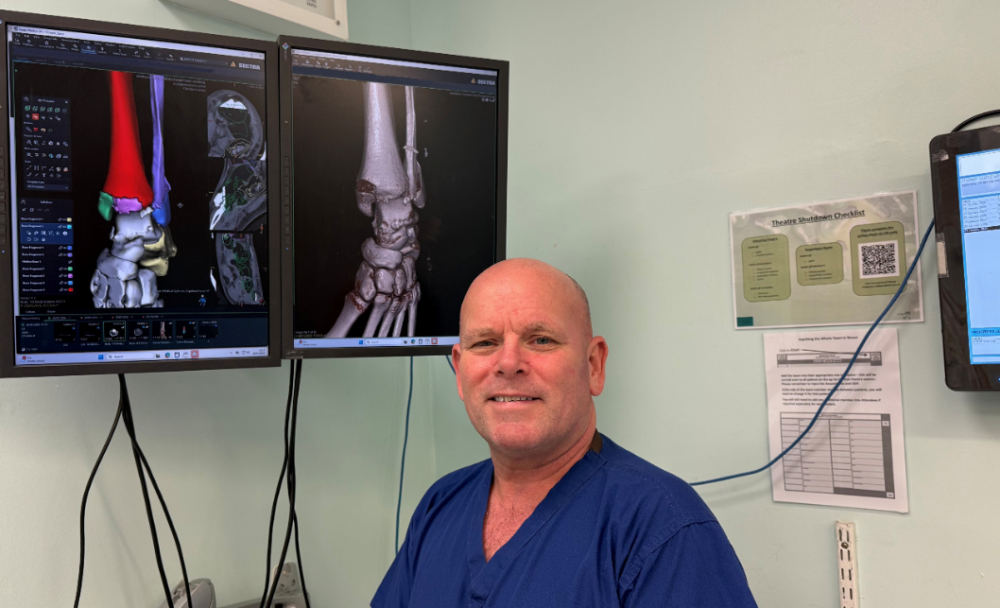
Trust boards need to adopt a dual-track funding strategy: protecting essential services while ring-fencing investment in digital capabilities that enable new models of care, says Richard Oswald, NHS Client Director at Exponential-e
As the NHS starts its 2026/27 financial year, senior leaders across trusts and integrated care systems (ICSs) face one of the most delicate balancing acts in recent times. #
The task is not simply to distribute constrained budgets to sustain critical services through another year of demand pressure.
It is to do so while making deliberate, future-focused investments that will determine whether hospitals remain viable, resilient and digitally capable over the next decade.
The challenge is structural as much as financial. Every trust must continue delivering safe, high-quality care across emergency, elective and community pathways. Yet the system cannot afford to stand still digitally.
The coming financial year must therefore be viewed not as a period of business as usual, but as a pivot point. One in which funding decisions support both immediate operational continuity and the long-term digital maturity required of a modern healthcare system.
Funding today’s services while investing in tomorrow
Senior leaders will rightly prioritise funding to maintain core clinical services, workforce stability and patient safety.
However, a purely defensive allocation of resources risks perpetuating the cycle of reactive spending that has historically prevented transformational change.
If 2026/27 budgets are consumed solely by today’s pressures, the NHS will find itself in the same position – or worse – in 2027/28.
Digital maturity is not a discretionary investment. It is now central to operational efficiency, patient safety, workforce productivity and financial sustainability.
Electronic patient records, interoperable systems, secure infrastructure, data platforms and digitally enabled pathways are no longer optional enhancements; they are foundational requirements.
Trust boards must therefore adopt a dual-track funding strategy: protecting essential services while ring-fencing investment in digital capabilities that enable new models of care.
Without this deliberate allocation, the system will continue to absorb rising demand using legacy processes and fragmented technology, an approach that is neither sustainable nor affordable.
Standardising and stabilising across ICS regions
The evolution of integrated care systems has created a clear policy direction: collaboration, standardisation and shared accountability across regional health economies.
The 2026/27 financial year must accelerate this trajectory.
Too often, trusts within the same ICS continue to operate with divergent systems, procurement approaches and digital architectures.
This fragmentation increases cost, reduces interoperability and limits the ability to deliver consistent patient experiences across geographies.
Standardisation and stabilisation across ICS regions must therefore become a core financial planning principle.
This does not imply uniformity for its own sake, but rather the deliberate alignment of core digital and operational foundations – infrastructure, security, data standards, and shared platforms – that enable trusts to operate cohesively.
When systems are stabilised and standardised, variation in care delivery can be addressed more effectively, shared services can be scaled, and innovation can be deployed regionally rather than in isolated organisational silos.
Most importantly, patients experience continuity of care regardless of where they enter the system.

Richard Oswald
The case for collaborative investment
There is now substantial policy and operational momentum behind collaborative working across neighbouring trusts and ICSs.
National guidance continues to emphasise shared procurement, platform convergence and regional collaboration as key levers for financial sustainability and service improvement.
Pooling budgets across trusts for major digital and infrastructure programmes offers clear advantages:
- Greater return on investment through shared platforms and economies of scale
- Faster realisation of benefits by avoiding duplicated procurement and implementation cycles
- Reduced operational overheads through consolidated support and maintenance
- Improved interoperability enabling seamless patient pathways across organisations
A single trust acting alone will always face financial and operational limitations.
Multiple trusts acting collectively can achieve purchasing power, technical resilience and strategic coherence that would otherwise be unattainable.
Shared services – whether in digital infrastructure, cyber security, data platforms or administrative functions – must be built upon strong, common digital foundations.
Without these foundations, collaboration becomes complex and costly. With them, collaboration becomes the most efficient route to modernisation.
Avoiding the trap of short-term affordability
In a constrained financial environment, the temptation to prioritise solutions that appear cost-effective in the short term is understandable.
Yet this is one of the most significant risks facing the NHS as it enters the new financial year.
A system or platform that is attractive today because of a low entry cost or rapid deployment timeline may not be fit for future purpose.
Vendor lock-in, limited interoperability, restrictive licensing models and opaque long-term operational costs can quickly erode any initial savings.
The reality is simple: the cheapest solution today is rarely the most cost-effective over its lifecycle.
If patient pathways evolve – as they inevitably will – systems must scale and adapt accordingly.
If they cannot, trusts face the prospect of costly re-procurement, complex migrations and operational disruption. What appeared to be a prudent financial decision can become a long-term liability.
Senior leaders must therefore evaluate technology investments not only on immediate affordability, but on scalability, openness, interoperability and total cost of ownership.
The question should not be “Can we afford this now?” but “Will this still serve us and our patients five to ten years from now?”
Keeping the patient at the centre
Amid discussions of budgets, systems and structures, it is essential to return to the central purpose of the NHS: the patient.
Every funding decision ultimately affects patient outcomes, access and experience. Fragmented systems create fragmented care. Poor interoperability leads to delays, duplication and risk.
Conversely, shared platforms and coordinated investment enable smoother pathways, faster diagnosis, safer transitions and more personalised care.
The NHS is funded by the public, for the public. Taxpayers expect and deserve services that are not only clinically excellent but also operationally efficient and technologically fit for purpose.
Where services can be delivered more effectively and economically at regional or national scale, they should be. This is not merely a financial imperative; it is a moral one.
A defining financial year
The 2026/27 financial year will be defined not by the size of NHS budgets, but by how intelligently they are deployed.
Trust leaders must distribute funds in a way that sustains critical services today while building the digital and operational foundations required for tomorrow.
This means investing collaboratively rather than in isolation. Standardising where it delivers value.
Challenging short-term procurement decisions that create long-term constraints. And always, relentlessly, keeping the patient at the centre of every investment decision.
If trusts across ICS regions act together – by pooling resources, aligning strategies and committing to shared digital maturity – the NHS can achieve more than the sum of its parts.
The opportunity is not simply to manage another financial year, but to shape a more sustainable, connected and patient-centred health service for the decade ahead.