



From the painful experience of getting a tattoo came the concept which is disrupting a major part of the US healthcare market.
And through Cary Jardin’s decision to get inked, the idea of AccendoWave was born, which, in just over a decade, has become the leading venture in the United States in measuring pain objectively and has created the largest real time database on pain in the world.
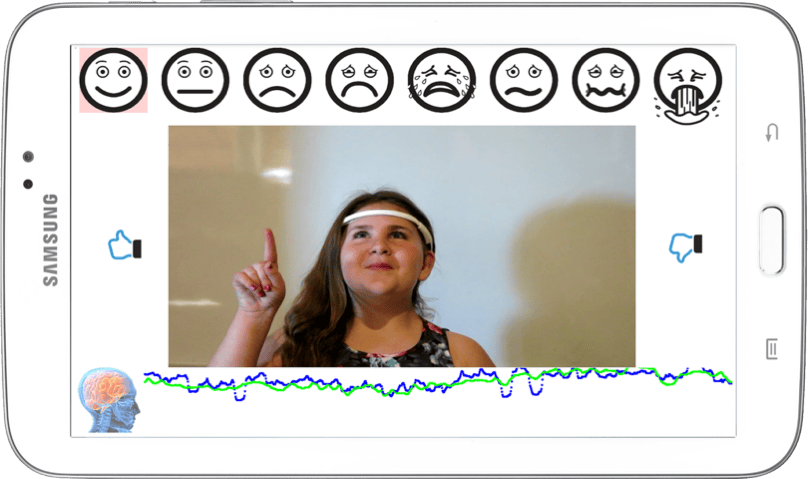
Through the use of an EEG headband and AccendoWave software, it has been proven to reduce discomfort in 83 per cent of patients in a clinical setting – all without any pharmaceutical intervention – and has introduced scales of measuring pain and nausea in a hospital setting for the first time.
The technology is in use in Hospital Corporation of America (HCA) sites, which helped to incubate and develop the technology in its earliest days, and the business has also secured partnerships with two technology giants – Samsung and AT&T.
A machine learning technology venture, AccendoWave builds on the experience and expertise of its founders – tech expert Cary and Martha Lawrence, who has over 25 years of experience in healthcare, including executive leadership at HCA – to revolutionise pain measurement.
And it all began with the simple experience of having a tattoo.
“Cary’s wife had just had their third child and he wanted to get a tattoo with her name on it, in recognition of all the pain and discomfort she had gone through in giving birth,” recalls Martha.
“That experience of getting a tattoo was incredibly painful for him, but how do you articulate that? Pain is ubiquitous, 100 per cent of us feel it, but it’s very subjective.
“He began to think about how the pain resonates in the brain and how you could measure that.”
From that experience, Cary and Martha worked together to take the concept of quantifying pain forward and began to develop an algorithm to help gather such data. A headband gathers the data directly from the brain, which is then transmitted to the tablet and is sent to the cloud.
“It’s really difficult to get data on pain, as you can’t put people in pain to measure that – but pain is the primary reason why patients access healthcare and is the primary driver of cost, so we need to understand it better,” says Martha.
“Eighty per cent of all pain research is carried out with human men and male mice – but 70 per cent of people in chronic pain are women.
“We wanted to create evidence-based data, driven by technology, in a very credible way. I come from a very evidence-based hospital company background, so fully appreciate the importance of real world data to back up what we were doing.
“We again used the experience of getting a tattoo and spent six months monitoring 1,000 people who got tattoos at one of the best places in the United States. They put themselves in pain so we could measure the data.
“We gave them a squeeze ball to help measure their pain and noticed several people were squeezing it even before the needle hit their skin – for them, it was the anxiety and stress which they were attributing as pain.
“Through correlating the brain waves with this perception of pain or nausea, with the headband gathering data from the frontal lobe, we can accurately measure this.”
As well as measuring pain, AccendoWave’s software also offers the means to help relieve it through channeling people’s attention onto more enjoyable matters.
“We have music content, games, movies, which can divert attention from pain. We have video clips on a tablet and when you’re in that section, the content changes based on brainwave activity – the algorithm recognises what reduces pain and reaches out for more content like that,” says Martha.
“That can be different for everyone – for me, it would be Golden Retriever puppies, for other people it may be things from their 1950s heyday, or Taylor Swift – but our technology can show the effects of that.”
And with AccendoWave technology used in hospitals across the US so far, the database of pain – already the largest ever created on pain measurement – continues to develop.
“We have put together a database which centres around our goal of improving care. Pain is subjective, so by quantifying that and having data, that’s really important,” says Martha.
“There are some obvious gender differences we have found, and there is also great interest in our senior database, as there is very little data out there on seniors who have a really hard time in articulating their pain.
“Cognitive decline can pose barriers to this, but it becomes easier if that information is provided for you, and that data can then be used to get a better match between medical services and your level of pain.”
While AccendoWave is already a leader in its native US, international expansion is a target for the business – but at the right time.
“We have had international interest but it’s about being disciplined and executing our roadmap,” says Martha.