


By Roy Wills, VP, Head of Healthcare Business and Partnerships, Intellias
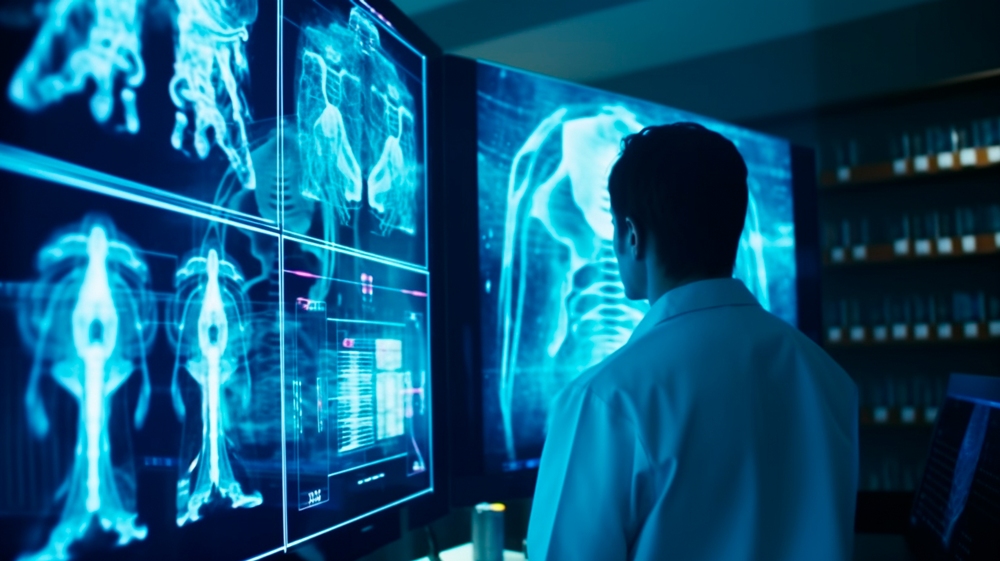
Medical imaging has always been at the heart of modern medicine – the lens through which clinicians see what the human eye cannot.
Yet as imaging has evolved from grainy 2D pictures to ultra-high-resolution tomographic images, it’s also become a data-intensive discipline.
The sheer volume and complexity of images produced today forces many radiologists to focus on image analysis and reporting.
Consequently, interpretation of images is left to non-radiologists, which may negatively influence health outcomes.
This pressure is compounded by a chronic workforce shortage.
Europe, and particularly the UK, faces a severe shortfall of trained radiologists, with just 4.7 radiologists per 100,000 people – far short of the eight per 100,000 widely considered necessary.
Simply hiring more specialists will not bridge this gap at the scale or speed required, which is why many healthcare systems are now looking to artificial intelligence (AI) to transform the future of medical imaging.
Why is AI poised to transform radiology?
The transformative potential of AI lies in its ability to rapidly process complex datasets – something traditional radiological workflows struggle to achieve.
AI algorithms trained on millions of annotated images can now spot subtle abnormalities, quantify disease progression, and prioritise cases with remarkable accuracy.
It’s really important to note in this conversation that rather than replacing human expertise, AI’s role here is to accelerate tasks.It can rapidly filter and pre-analyse scans, allowing radiologists to dedicate their skills where they are most needed, such as: interpreting complex cases, forming judgments within a clinical context, and engaging directly with patients and care teams.
In doing so, AI can help alleviate the workload bottlenecks that slow down diagnosis, while reducing the risk of missed or late findings. These capabilities have the potential to change the radiology value chain from end-to-end.
What are the tangible benefits emerging today?
Although still in its early stages, AI-driven imaging is already producing measurable benefits in hospitals and diagnostic centers worldwide. Among the most important are these five:
- Improved image quality: By reducing noise and enhancing resolution, AI tools can shorten scan times and reduce radiation exposure while producing clearer, more consistent images.

Roy Wills
- Earlier and more accurate detection: Machine learning models can spot patterns invisible to the human eye, enabling earlier diagnosis of cancers, neurological disorders, and cardiovascular conditions, often before symptoms appear.
- Automated workflows: AI can handle repetitive administrative tasks such as sorting images and generating preliminary reports, streamlining handoffs between technicians, radiologists, and referring clinicians.
- Fewer errors and increased collaboration: By providing consistent, data-backed insights, AI reduces subjectivity in image interpretation and strengthens communication between clinical teams.
- Personalised care pathways: When linked with broader health records, AI-generated insights can help tailor treatment plans to individual patient profiles, improving care outcomes.
These practical improvements are not theoretical promises – they are emerging in real-world healthcare settings now, proving AI’s potential to elevate both radiology and overall patient care.
Where is AI having the greatest impact?
AI’s transformative impact is particularly visible across a few areas of medical imaging: lung imaging and breast imaging.
To get more of an understanding, it’s worth taking a closer look at these two in more detail.
Lung imaging: A deep learning tool developed by Google and Northwestern University Feinberg School of Medicine detects malignant lung nodules on CT scans by analysing the lungs as a single 3D image rather than multiple 2D slices.
It also compares current scans with prior imaging to better assess cancer risk.
Breast imaging: Artificial intelligence is helping address key challenges in breast imaging, including missed cancers, false positives, and increasing caseloads.
When paired with advanced techniques like digital breast tomosynthesis (3D mammography), which delivers highly detailed images, AI has demonstrated strong potential in detecting breast cancer at earlier stages.
In fact, a study found that radiologists using AI as a decision-support tool outperformed their unaided assessments.
Notably, when used as a standalone tool, the same algorithm demonstrated the average diagnostic performance of a human radiologist.
Accuracy, reliability and responsible use of AI in medical imaging
While the opportunities of AI are compelling, they must be matched by rigorous governance. AI systems in healthcare handle sensitive patient data and influence life-critical decisions, which makes trust a cornerstone of the technology.
Without a doubt, healthcare providers adopting AI for imaging need to have clear policies on:
> Data security and privacy, including encryption, secure storage, and compliance with GDPR, HIPAA and other data protection regulations.
> Bias mitigation, ensuring training data reflects diverse populations to avoid algorithmic inequities.
> Clinical oversight and transparency, including human-in-the-loop validation, performance audits, and clear communication with patients about when and how AI is used.
As in most cases, the adoption of AI in healthcare could be slowed by skepticism or misuse. Staying true to guardrails – ensuring regulatory compliance and safeguarding the integrity of clinical decision-making – are essential to maintain patient trust, and therefore, unlock the true benefit AI has to offer here.
AI as a step change for healthcare
In recent years, it’s become clear that the challenges facing medical imaging – rising demand, increasing complexity, and persistent workforce shortages – cannot be solved through human effort alone.
AI offers a way to rebalance the equation.
By automating routine tasks, accelerating analysis, and surfacing early disease signals, AI has the potential to give radiologists back the bandwidth to focus on a centric part of their role – applying expert judgment to improve patient care.
AI in medical imaging is still at an early stage, but as more successful use cases come to light, its trajectory is clear.
As adoption grows and governance frameworks mature, AI will shift from an experimental adjunct to an essential element of clinical practice, reshaping diagnosis, treatment and, ultimately, care for patients.