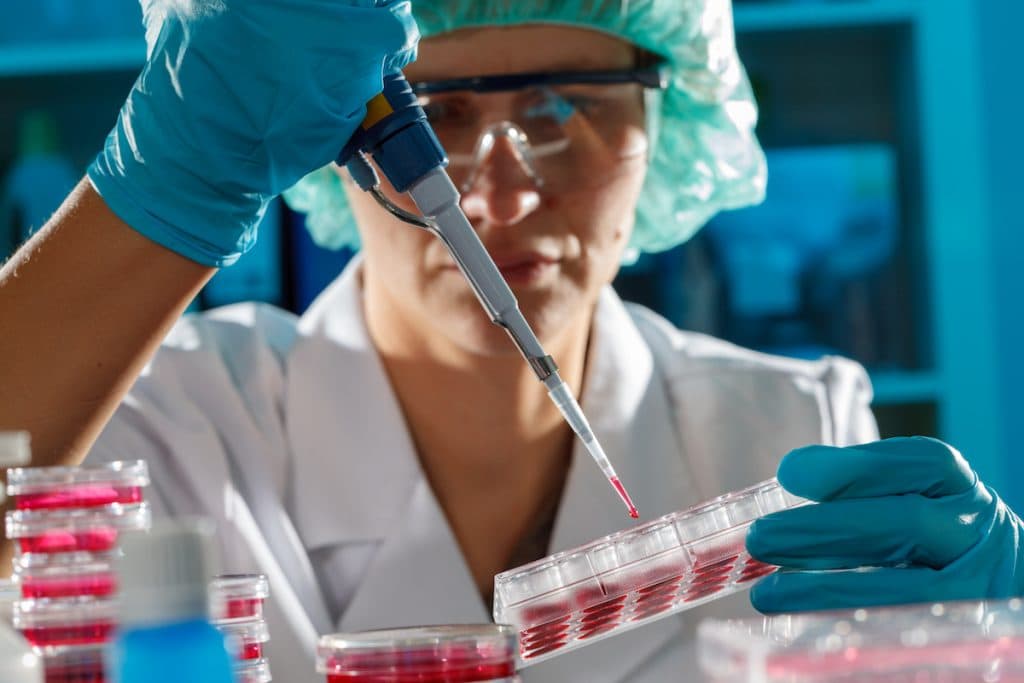




Patients could soon benefit from world-leading technology to diagnose bowel cancer earlier, faster and cheaper, reducing the need for invasive colonoscopies and biopsies, and potentially saving valuable time and resource for the NHS, the UK government has announced today.
The technology has the potential to detect bowel cancer earlier, improving diagnosis rates, and offering patients valuable time back to treat the disease faster and more effectively.
In collaboration with the National Institute for Health and Care Research (NIHR), the government has awarded £2.4m to progress the development of the AI-driven blood test, known as miONCO-Dx.

The test was developed on data from over 20,000 patients and has since been translated into a cheaper, faster and more scalable solution, marking a significant step forward.
This new solution will be assessed in a clinical trial of 8,000 patients, giving a formal and significant step towards bringing the test closer to patients by ensuring it is fit for purpose in the NHS.
The test works by measuring the microRNA in a blood sample and using AI to identify if cancer is present and if so, where it is located in the body.
Initial tests have produced promising results, having shown that it is able to detect 12 of the most lethal and common cancers, including bowel cancer, at an early stage, with over 99 per cent accuracy.
Secretary of State for Health and Social Care, Wes Streeting, said: “From my own experience, I know the devastating toll cancer can take on patients and families, and how many of them have been faced with long waiting lists to get the diagnosis and treatment they deserve.
“We know that the key to surviving cancer is catching it as early as possible, so this government is taking the urgent action needed to make sure that happens through our Plan for Change, from developing world leading technology to detect bowel cancer earlier, through to setting up hubs for the UK’s top scientists to research and treat the disease.”
With no other trial currently working in the same way, this a world-leader and will support in placing Britain at the forefront of revolutionising healthcare.
The simple blood test will be able to identify cancer earlier, where treatment is not only more effective, but also cheaper and easier, potentially freeing up valuable NHS resources and staffing time in the long run.
Bowel cancer can be difficult to detect in the early stages, and survivability drops significantly as the disease progresses, as treatment options become more limited. Investing in technologies that can support experts to detect cancer early, such as the miONCO-Dx, is an essential first step in reducing the lives lost by cancer.
Today’s announcement comes as the Health and Social Care Secretary is set to visit a research lab funded by Cancer Research UK, which has been renamed in memory of campaigner Dame Deborah James.
The BowelBabe Laboratory will bring together leading scientists to advance our understanding of bowel cancer.
It will conduct cutting-edge research and will aid in the development of new treatments for bowel cancer.
Michelle Mitchell, chief executive of Cancer Research UK, said: “Bowel cancer is the second biggest cause of cancer deaths in the UK. I’m delighted to welcome the Health Secretary, Wes Streeting, to the Bowelbabe Laboratory and show him the cutting-edge research being carried out in the name of the inspirational Dame Deborah James.
“She touched the lives of so many, and her legacy is supporting people affected by bowel cancer across the country.
This NIHR trial shows the importance of research and the impact new technology and developments could have.
The upcoming National Cancer Plan for England is an opportunity for the UK Government to improve the lives of not just bowel cancer patients, but all cancer patients.
“We will continue to work with them on this.”