



A surgical robot tasked with assisting surgery will be launched into space for medical practice which is out of this world.
Thanks to a NASA grant, robot MIRA will be sent to the International Space Station where it will perform activities that simulate those used in surgery, such as cutting simulated tissue and manipulating small objects.
The bizarre project is being run by Virtual Incision Corporation, a medical device company pioneering the world’s first miniaturised robotic-assisted surgery (RAS) platform. It has announced that MIRA will head for its first testing adventure in 2024.
The opportunity is driven by a recently awarded grant from the National Aeronautics and Space Administration (NASA).
John Murphy, CEO of Virtual Incision said: “The Virtual Incision MIRA platform was designed to deliver the power of a mainframe robotic-assisted surgery device in a miniaturized size, with the goal of making RAS accessible in any operating room on the planet.”
“Working with NASA aboard the space station will test how MIRA can make surgery accessible in even the most faraway places.”
A light space mission
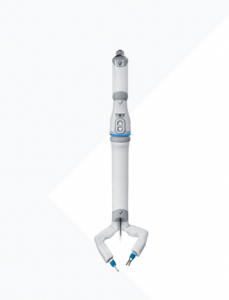
Weighing approximately 1 kg, (2 pounds), its small size makes it appealing to surgeons and hospital staff and also makes it ideal for use within the tight space and mass requirements of a long-duration space mission.
Once aboard, MIRA will operate inside a microwave-oven-sized experiment locker and perform activities that simulate those used in surgery, such as cutting simulated tissue and manipulating small objects.
Although it is not yet available for sale, MIRA is currently in the final stages of its U.S. clinical trial under an Investigational Device Exemption to support U.S. Food and Drug Administration (FDA) market authorisation.
“NASA has ambitious plans for long-duration space travel, and it’s important to test the capabilities of technology that may be beneficial during missions measured in months and years,” said Shane Farritor, co-founder and chief technology officer at Virtual Incision.
“MIRA continues to push the boundaries of what’s possible in RAS, and we are pleased with its performance so far during clinical trials. We’re excited to take it a step further and help identify what could be possible in the future as space travel is becoming more of a reality for mankind.”
NASA’s grant was awarded to the University of Nebraska-Lincoln through the Established Program to Stimulate Competitive Research (EPSCoR) at the University of Nebraska Omaha.