



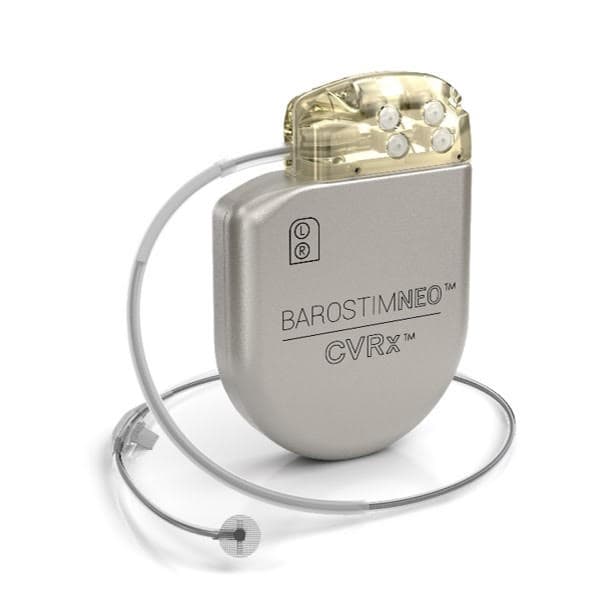
CVRx, Inc has received U.S. Food and Drug Administration (FDA) approval for magnetic resonance (MR) conditional labelling for its Barostim System.
Barostim is the world’s first FDA-approved neuromodulation device to treat the symptoms of heart failure.
The Barostim System now includes instructions to allow for safe MRI scans of the head and lower extremities, meaning heart failure patients implanted with Barostim have more diagnostic options.
All Barostim System patients, including those already receiving Barostim therapy, can safely receive an MRI at 1.5T when conditions of use are met.
Nadim Yared, President and CEO of CVRx, said:
“This is a significant milestone for CVRx, and more importantly, for the heart failure patients benefitting from our therapy.
“These heart failure patients undergo many physical assessments. This approval expands the diagnostic imaging options available to physicians for these patients, should the need arise.”
Barostim is an implantable device that delivers electrical pulses to baroreceptors located in the wall of the carotid artery. Baroreceptors activate the body’s baroreflex, which in turn triggers an autonomic response to the heart.
These effects reduce the heart’s workload and help it pump more efficiently, helping to improve the symptoms for patients with heart failure.
In the BeAT-HF Study, patients who had Barostim implanted were able to walk further in a 6-minute hall walk test, have a higher quality of life and appeared to have a reduction in the rate of serious cardiovascular events, including arrythmias, compared to the control group.
The device received the FDA Breakthrough Device designation and is FDA-approved for use in heart failure patients in the U.S.
Around 6.2 million US adults have heart failure, according to the Center for Disease Control and Prevention (CDC).