


A UK clinical trial assessing organ damage in COVID-19 patients has disclosed preliminary results from its initial scans of 100 people.
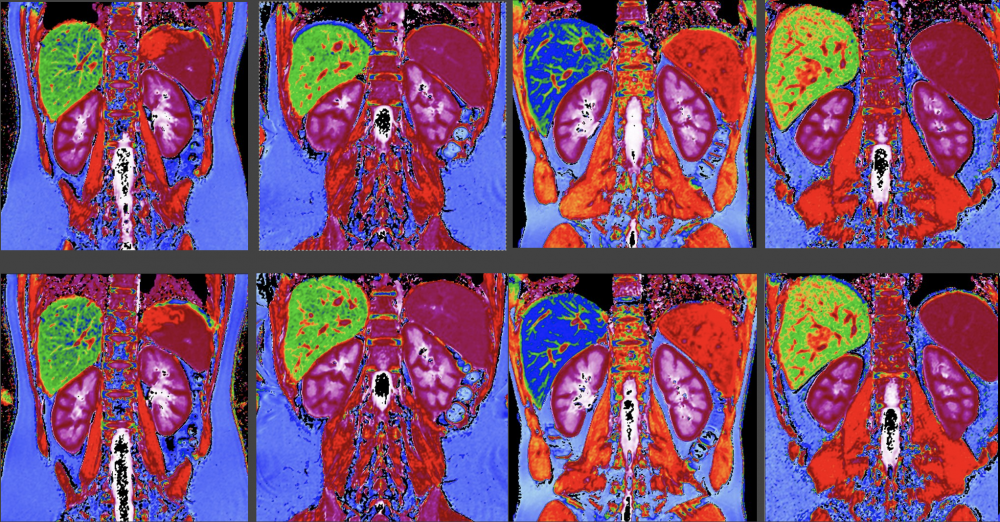
Led by Oxford-based medical imaging company Perspectum, the multi-organ study, known as COVERSCAN, is the first of its kind in the world.
Mapping the kidneys, pancreas, spleen, liver and lungs, COVERSCAN uses a technique known as multi-parametric MRI; a radiation-free method which allows for multiple scans of patients in a safe environment.
Preliminary results from the study show that approximately a third of scanned patients have definite organ impairment. A finding that Perspectum’s CEO, Rajarshi Banerjee says could affect the modelling of COVID-19.
Having already scanned over 100 people since the launch of the study in May, Perspectum has a waiting list of 250 patients and intends to continue until it reaches its target of 507 scans. Participants will be followed up for the next 24 months to assess organ recovery.
Banerjee says: “If we say that there are 60 million people in the UK, with 40 million being adults, and we accept that herd immunity is achieved with 50-60% penetration, that is 20-24 million adults. If a third of these will get heart damage, that’s 8 million adults.”
People with normal heart function pump out more than 57% of the blood contained in the heart. Early results from the COVERSCAN study have shown young people with a 10% reduction in heart function.
Banerjee says: “In patients with COVID, we are seeing that the heart is a little less vigorous in its pumping function.
“We’re seeing this in 40-45-year-olds who are otherwise healthy. How serious this is we don’t know yet. I hope that we show that the heart and liver recovers, but there is no evidence to say whether this will or will not happen.”
Although many people are likely to catch coronavirus, not all of them will show symptoms, with certain demographics being at a higher risk than others. COVID-19 is particularly acute for people with pre-existing heart disease, liver disease, metabolic diseases or diabetes.
Banerjee suggests that accelerating the approval of drugs for metabolic liver disease has the potential to save the lives of COVID-19 patients with underlying liver issues.
Banerjee says: “Those that are hospitalised will likely be older, male, non-white and have a metabolic disease.”
“We’ve seen that a lot of people who have been hospitalised have pretty bad fatty liver disease. So, what can we do to make people with liver disease better?
“By very happy coincidence, there has been a lot of developments in drugs for metabolic liver disease recently.
“These drugs can cause 8% weight loss and reverse liver injury in 12-18 weeks. The question is, should approvals for these drugs be accelerated because they may save lives; more so now than ever.
“I fully endorse the investment that is going into vaccines to prevent transmission but on the other side, we should also think about investing in things that save lives by pre-emptive action.”
Prior to the outbreak of COVID, Perspectum was in the process of developing a metabolic software suite for the measurement of organ health. In partnership with GE Healthcare and the National Consortium for Intelligent Medical Imaging, the company adapted the technology for use on COVID-19 patients.
Banerjee says: “Before COVID hit, we had a product called Atlas which was in development which looked at heart disease, kidney disease and diabetes, so we adapted the technology to use it for COVID.”
Having received funding from the EU and the National Consortium for Intelligent Medical Imaging, the company are now seeking further funding to broaden the study to encompass the North of England where COVID-19 is more prevalent.
Over the past eight years, Perspectum has developed new methods to modernise scanning for liver conditions, metabolic health, cancer and women’s health by eliminating the need for radiation and intravenous contrast.
“We can identify patients with chronic disease and cancer and monitor them in a safer way than traditional technologies like PET, CT and biopsies,” says Banerjee.
“Multi-parametric MRI has applications in many areas including liver disease and cancer. For example, with breast cancer, instead of using mammography and ultrasound which often misses tumours in young women, you can detect tumours much earlier with multi-parametric MRI and have them removed.”